
The 6 Monasteries of Meteora You Can Visit: History, Steps, Museums & Opening Info (Complete Guide)
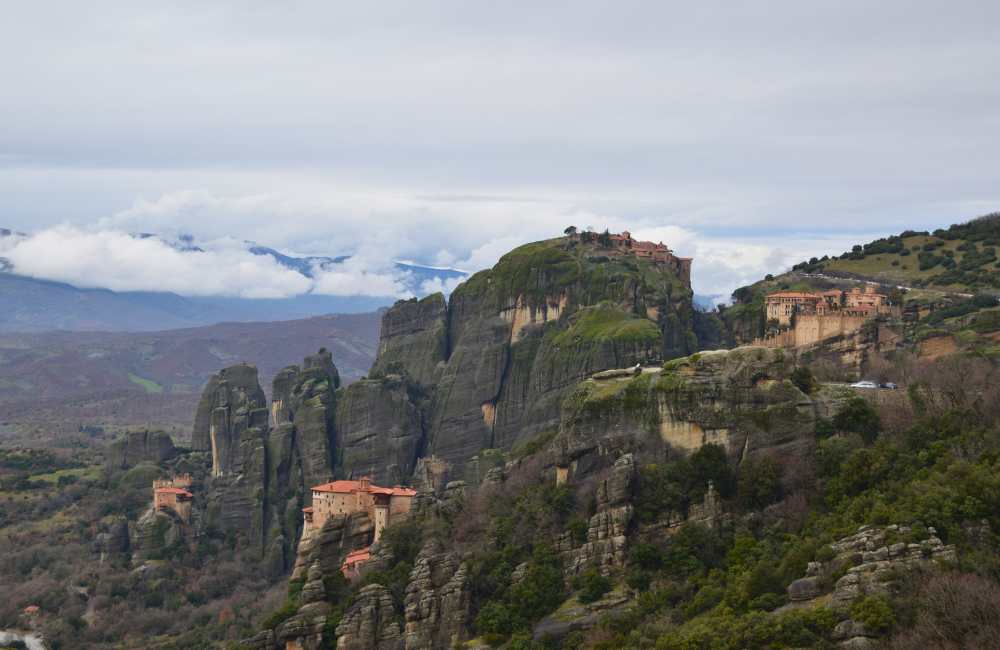
The monasteries of Meteora are among the most iconic religious landmarks in Europe. Perched dramatically on towering rock pillars above Kalambaka, these UNESCO-listed monasteries combine breathtaking scenery, Byzantine art, and centuries of Orthodox spiritual tradition.
This post has affiliate links. If you make a purchase, I might make a small commission at no extra cost to you.
Originally, 24 monasteries were built between the 14th and 16th centuries. Today, six active Meteora monasteries are open to visitors, each with its own history, architecture, museum collections, and level of difficulty to reach.
If you’re planning to visit Meteora, here is everything you need to know — including how many steps you’ll climb, which monasteries are nunneries, what you’ll see inside, and what makes each one unique.
Important visitor information before you go

Entrance Fee
Approximately €5 per monastery (cash only). Greek citizens (Greek Orthodox) enter for free.
Dress Code (Strictly Enforced)
All monasteries require modest dress:
- Men: Long pants required.
- Women: Must wear a long skirt (below the knee) and covered shoulders.

Even if women are wearing long pants (I suggest comfortable hiking pants), they are still required to wear a long skirt over them inside the monasteries.
Skirts are usually provided at the entrance free of charge.
This rule applies to all six monasteries.
The unique landscape of Meteora
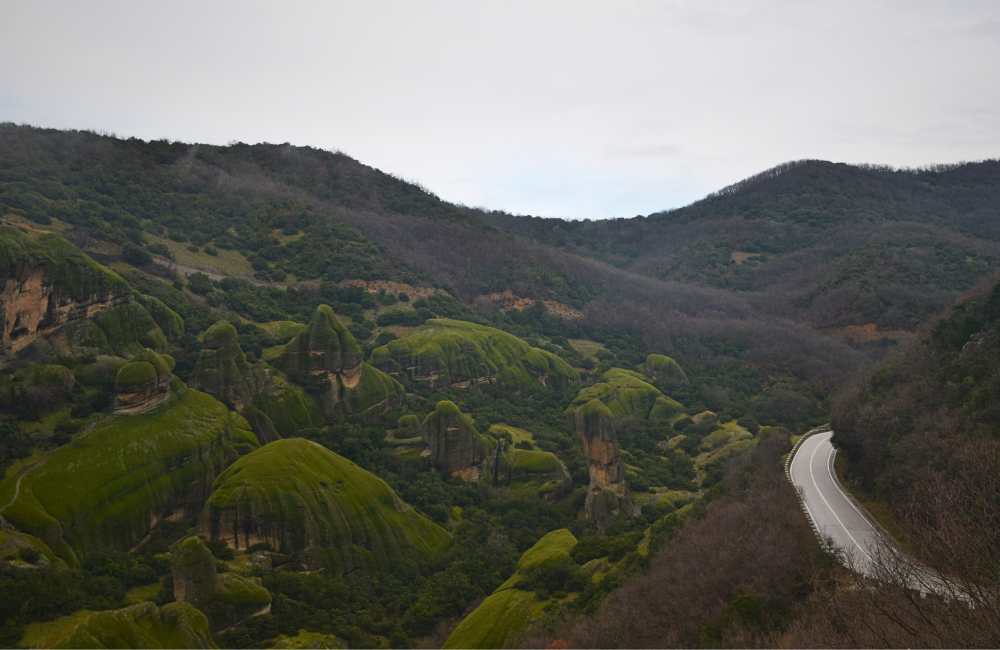
The striking rock pillars of Meteora didn’t form overnight — they are the result of millions of years of geological forces. The area was once a seabed, where layers of sand, mud, and gravel carried by rivers from the nearby Pindos Mountains slowly built up thick sedimentary deposits.

Over time, tectonic uplift raised these ancient layers above sea level, and the forces of erosion, wind, and water sculpted the softer material into the dramatic vertical cliffs we see today.
The Pineios River, the last major river flowing through the Thessalian Plain, carved channels across the landscape, shaping the valleys beneath the towering rocks.
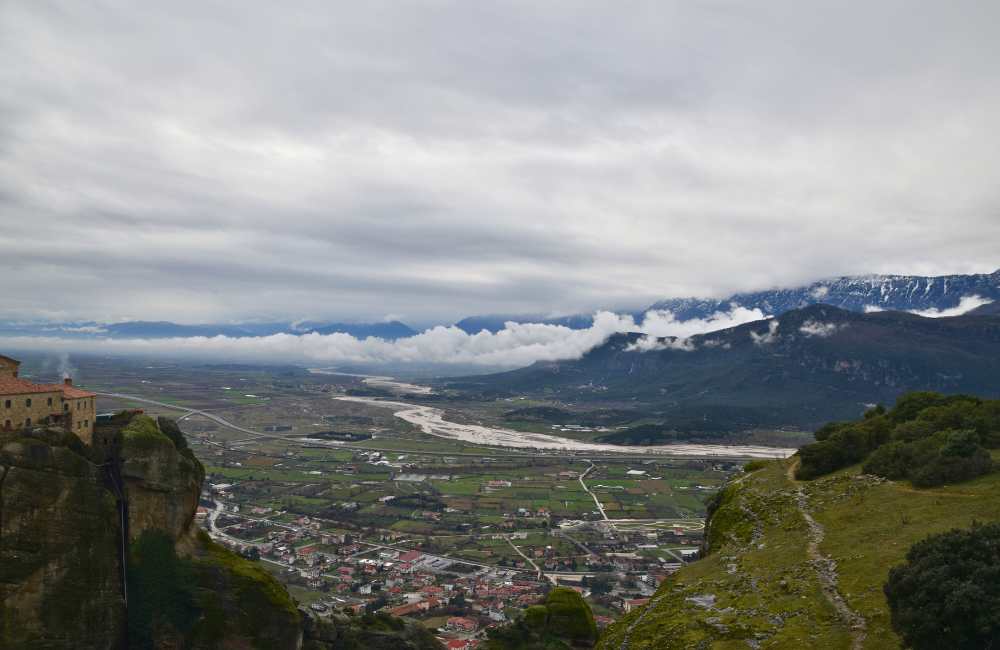
This combination of ancient marine sediments, tectonic activity, and relentless erosion created the perfect foundation for the monasteries, whose builders seemed to defy gravity by perching them atop the natural pillars.
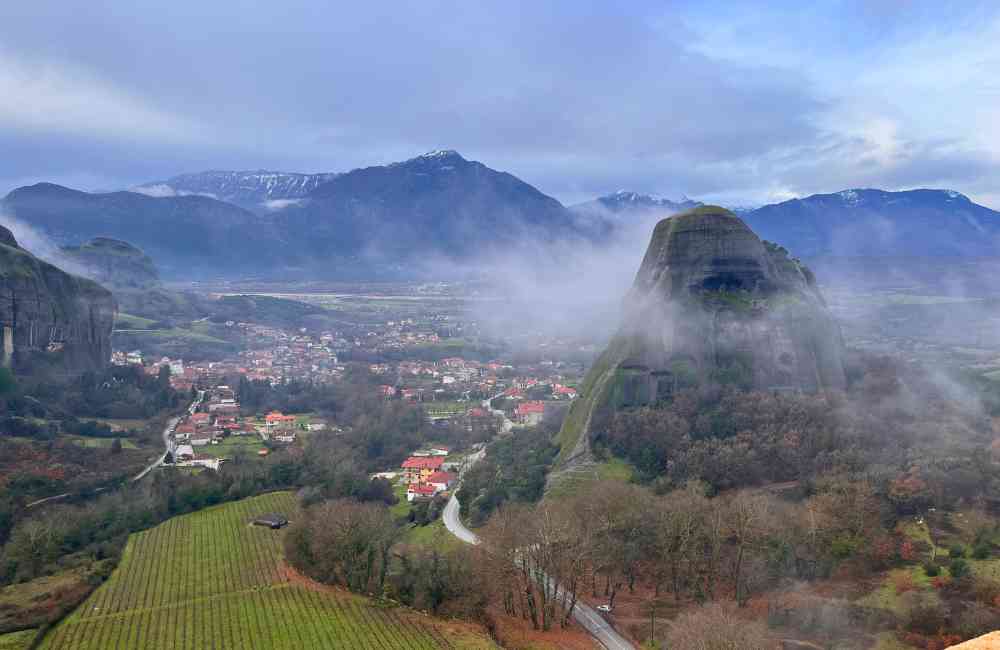
Walking through Meteora, you not only see the monasteries — you feel the immense natural history that shaped this extraordinary place.
1. Great Meteoron Monastery (Holy Monastery of the Transfiguration)
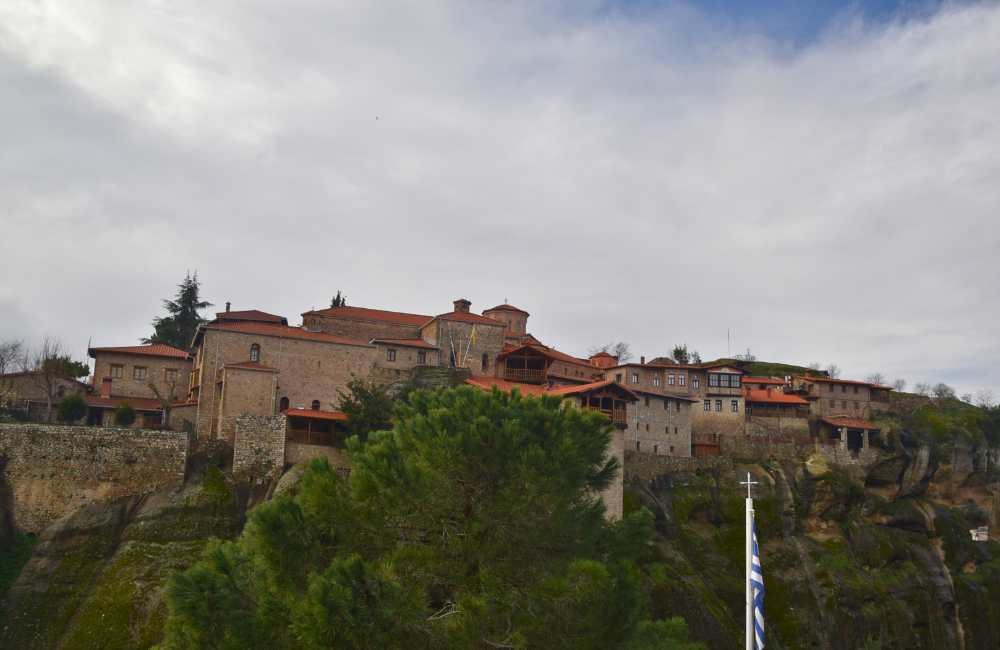
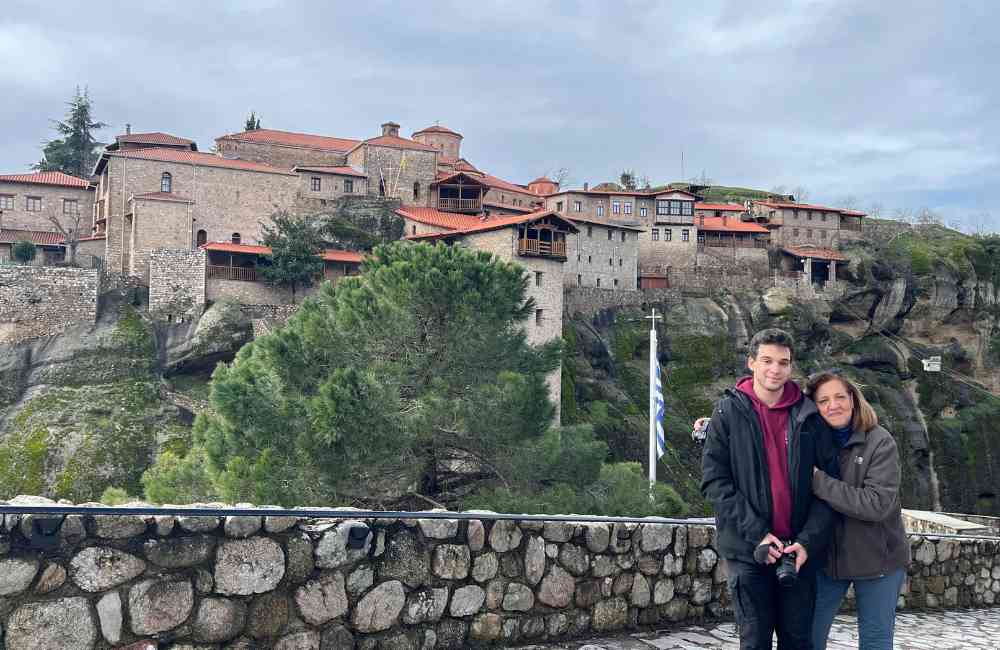
The largest and oldest monastery in Meteora
Founded in the 14th century by Saint Athanasios the Meteorite, Great Meteoron became the spiritual center of the Meteora monastic community. It impresses with its historical significance, serving as the spiritual center of Meteora for centuries.
The monastery also maintains its own vineyard, reflecting the deep role of wine in monastic life. Wine has always been a basic part of daily sustenance, but for the monks it takes on a sacred dimension: it is served on feast days, while nama, a sweet red wine, is essential in the celebration of the Holy Communion, the central sacrament of a monk’s spiritual life.
Steps to climb: ~300 steps
It is one of the longer climbs, but manageable with steady pacing.
What to see inside
- The impressive 16th-century Katholikon (main church)
- An extensive ecclesiastical museum
- Manuscripts, religious vestments, and sacred relics
- Former monastic kitchen and refectory
- Historical exhibits related to the Ottoman and WWII periods
Great Meteoron offers some of the widest panoramic views in Meteora.
Community: Monks
2. Varlaam Monastery

The most fascinating museum experience in Meteora
Founded in 1541, Varlaam is the second-largest monastery and one of the most visited. Its official name is Monastery of All Saints, commonly called Varlaam, to honor the founding monk.
Steps to climb: ~195 steps
Why Varlaam is special
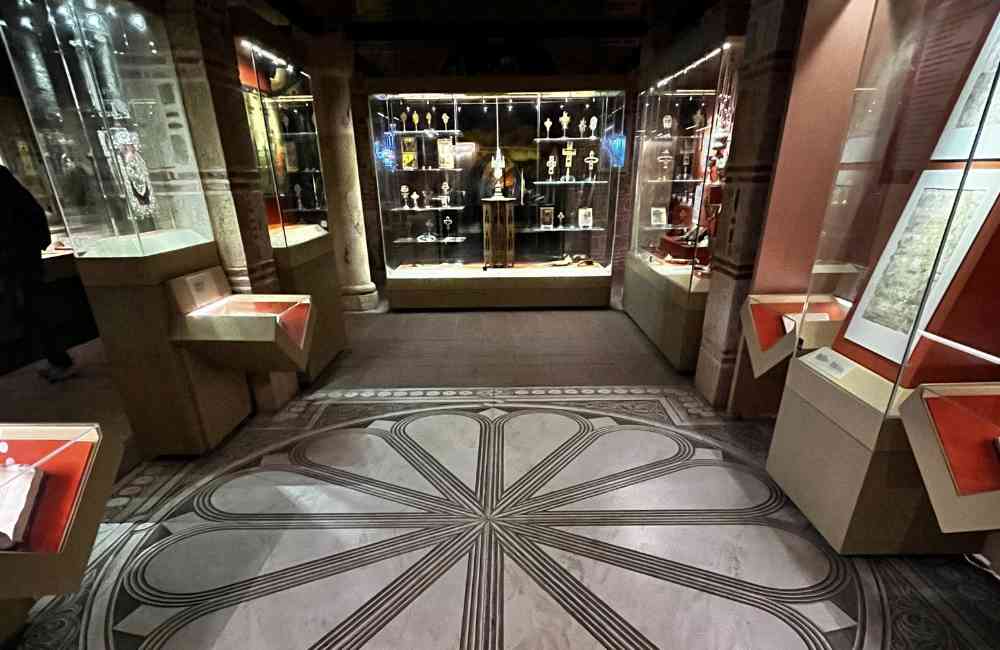
Varlaam houses one of the most interesting monastery museums in Meteora, featuring:
- A detailed Byzantine history exhibition
- The preserved rope net and pulley system was once used to lift monks and supplies
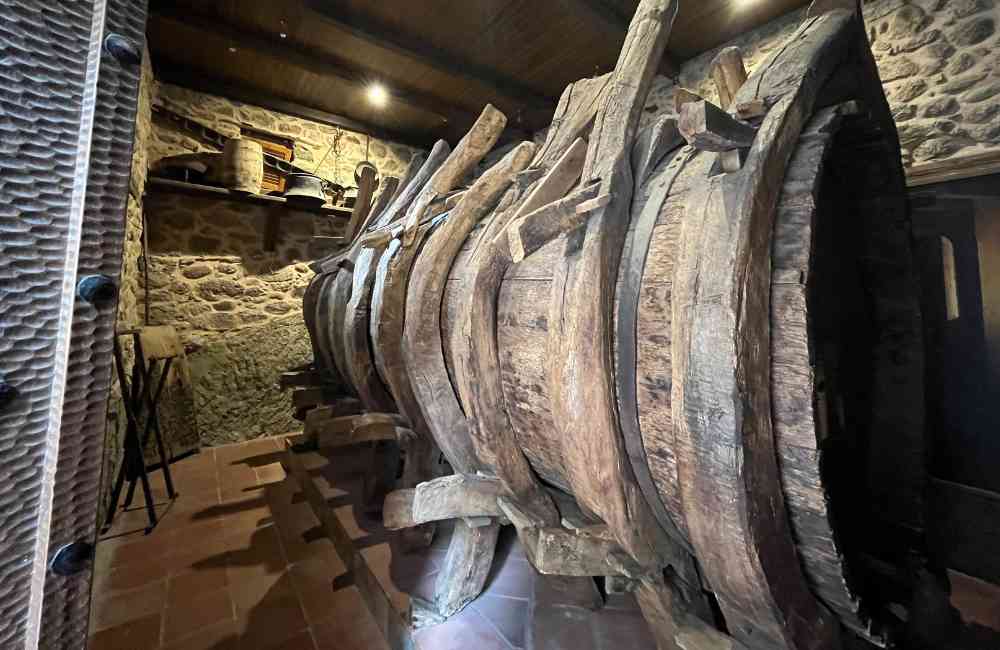
- A massive oak wine barrel, one of the largest in Greece
- The original wooden winch mechanism

Inside, visitors can watch rare historical footage showing early 20th-century monks being lifted next to the rock in nets — a powerful reminder of how inaccessible these monasteries once were.
The church contains exceptional 16th-century frescoes and a richly carved iconostasis.
Community: Monks
3. Roussanou Monastery (St. Barbara)
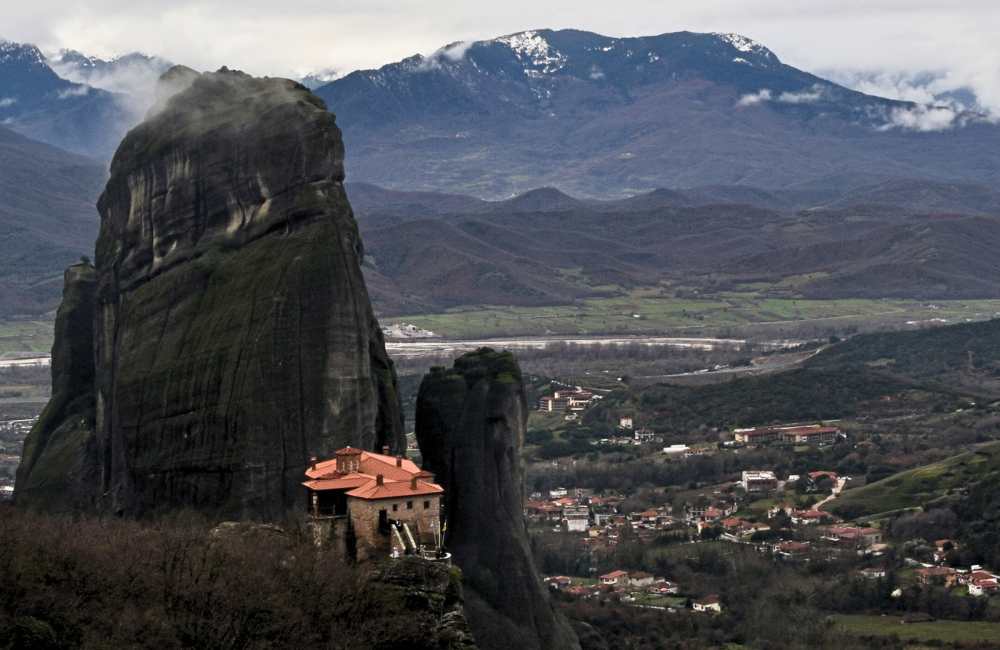
One of the most beautiful monasteries in Meteora
Built in the 16th century, Roussanou is now a women’s monastery and one of the most charming to visit.

Steps to climb: ~140 steps via bridge and stone staircase
Because it sits on a narrower rock, Roussanou feels intimate and atmospheric. The frescoes are vibrant and carefully preserved, and the courtyard is beautifully maintained.
Unique highlight
The nuns of Roussanou are known for producing oak honey, which has gained recognition across Europe. Visitors can purchase this locally produced honey, along with other handmade items, inside the monastery shop.
The views from Roussanou toward Varlaam and Great Meteoron are exceptional.
Community: Nuns
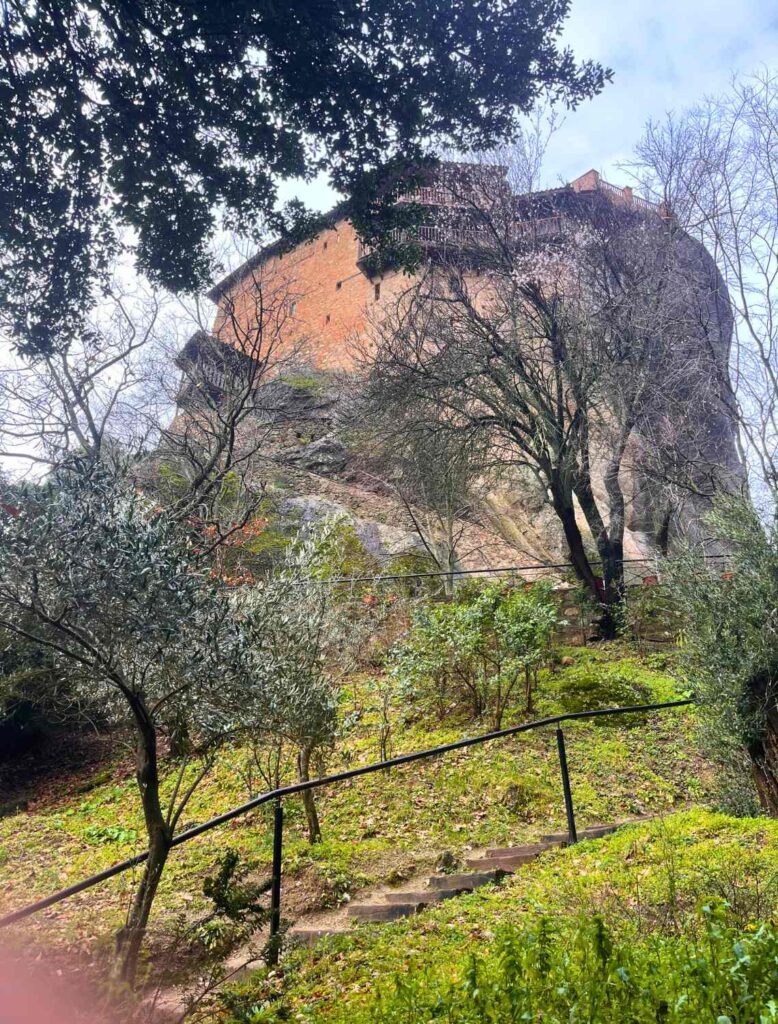
4. St. Nicholas Anapafsas Monastery

A steep, challenging climb
St. Nicholas (Agios Nikolaos Anapafsas) is often considered one of the hardest monasteries to reach after the Monastery of the Holy Trinity.
Steps to climb: ~150 steep, narrow steps
Because the rock surface is limited, the monastery is built vertically. As you ascend, you move through compact spaces and multiple levels. It feels harder than the number of steps suggests.
Artistic importance
The church contains outstanding frescoes painted in 1527 by Theophanes the Cretan, one of the most important post-Byzantine artists, teacher of the Cretan-born El Greco. His dramatic religious scenes make this monastery particularly significant for art lovers.
Community: Monks
5. Holy Trinity Monastery

The most dramatic and photographed monastery
Famous for its appearance in the James Bond film For Your Eyes Only, Holy Trinity (Agia Triada) stands isolated on a single towering rock.
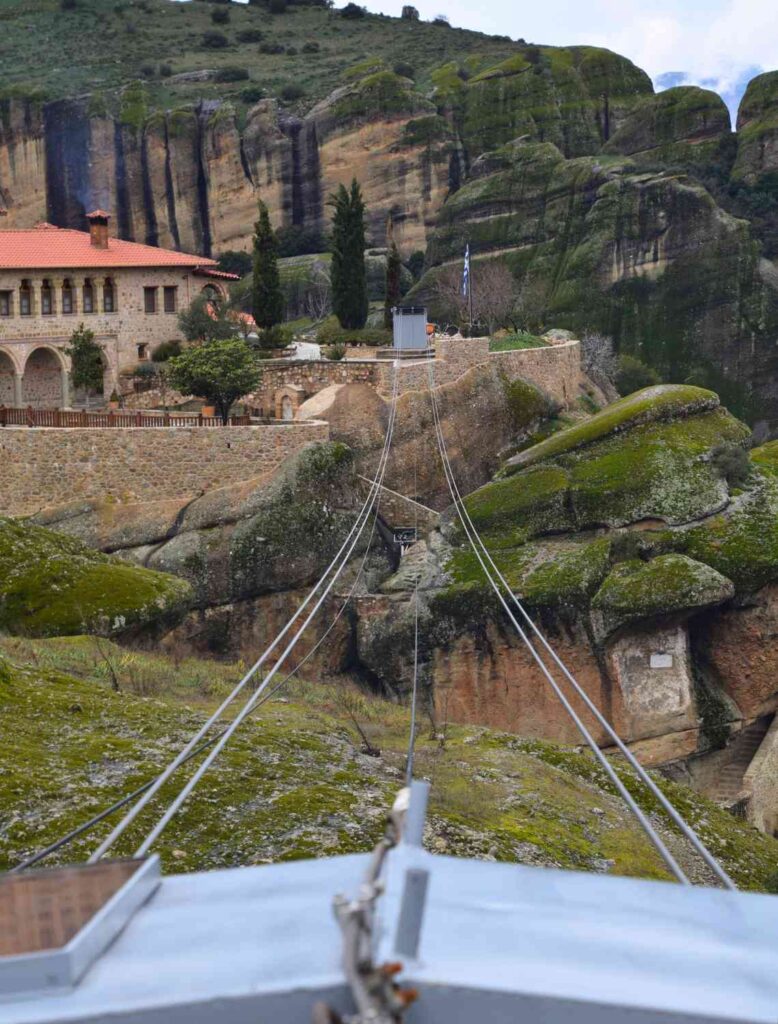
Steps to climb: ~140 steps
Access includes a short downhill walk followed by an ascent.
The monastery dates back to the 15th century and offers breathtaking 360-degree views over the Thessalian valley.
It feels quieter and more remote compared to the larger monasteries.
Community: Monks
6. St. Stephen Monastery

The easiest access & royal history
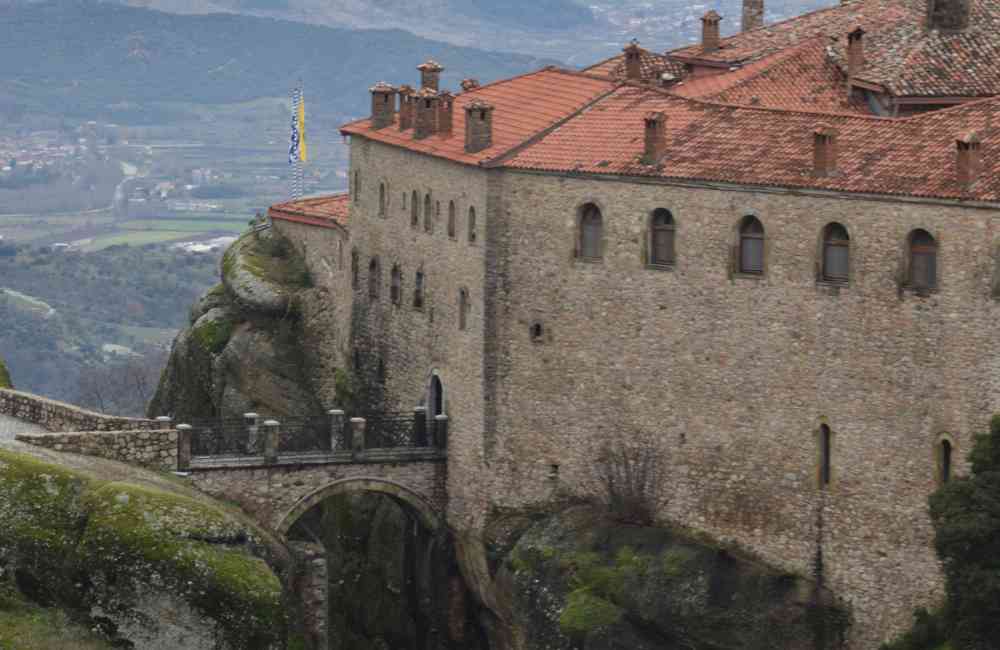
St. Stephen (Agios Stefanos) is unique in Meteora for two important reasons.
1. No steps to climb
It is the only monastery accessible directly by crossing a small bridge from the parking area — no long staircase required.
2. Royal status
Tradition holds that Constantine XI Palaiologos, the last Byzantine Emperor, visited this monastery. Unlike others, he was not lifted by rope nets, giving St. Stephen a distinct royal association in its history.
What to see
- The Church of St. Charalambos (18th century)
- Relics of St. Charalambos
- A small ecclesiastical museum
- Views toward Kalambaka
Because of its easy access, St. Stephen is ideal for visitors with limited mobility.
Community: Nuns
Which Meteora Monasteries are nunneries?
- Roussanou Monastery – Nuns
- St. Stephen Monastery – Nuns
The remaining four monasteries are male monastic communities.
Difficulty ranking (from easiest to most demanding)
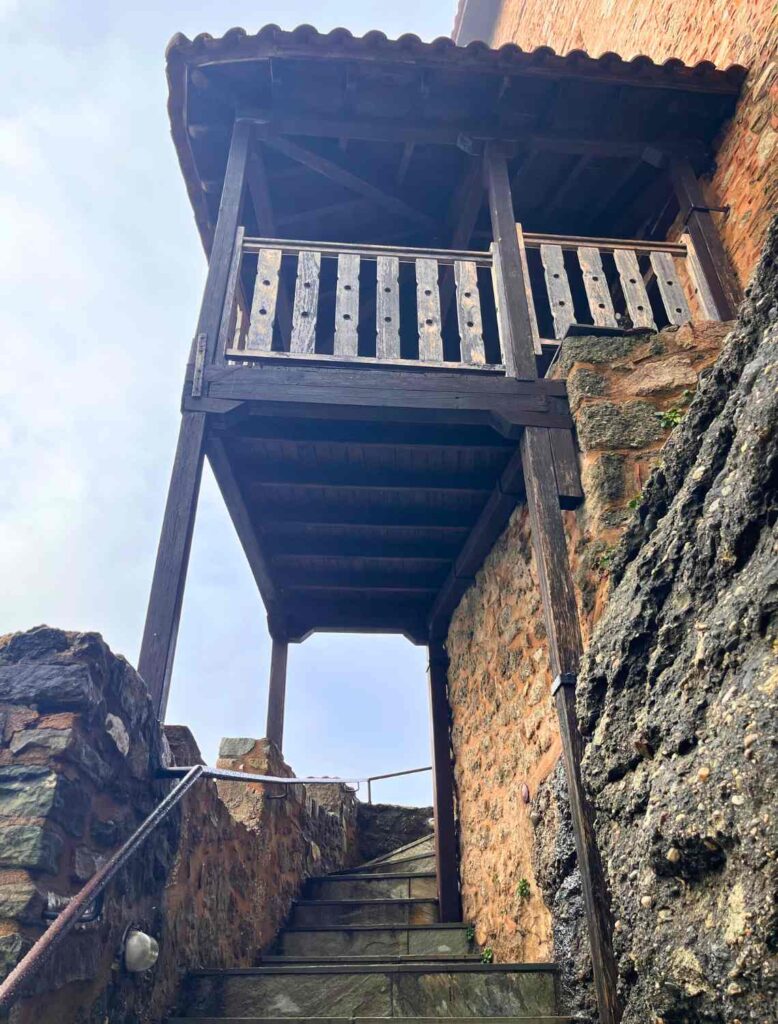
- St. Stephen – No steps
- Roussanou – Moderate climb
- Holy Trinity – Moderate
- Varlaam – Nearly 200 steps
- St. Nicholas Anapafsas – Steepest and very challenging
- Great Meteoron – Around 300 steps is widely considered the hardest to reach in Meteora, requiring a steep, challenging climb. Visitors must descend a path into a ravine before ascending over 140 carved steps to reach the entrance
Which monastery should you visit?
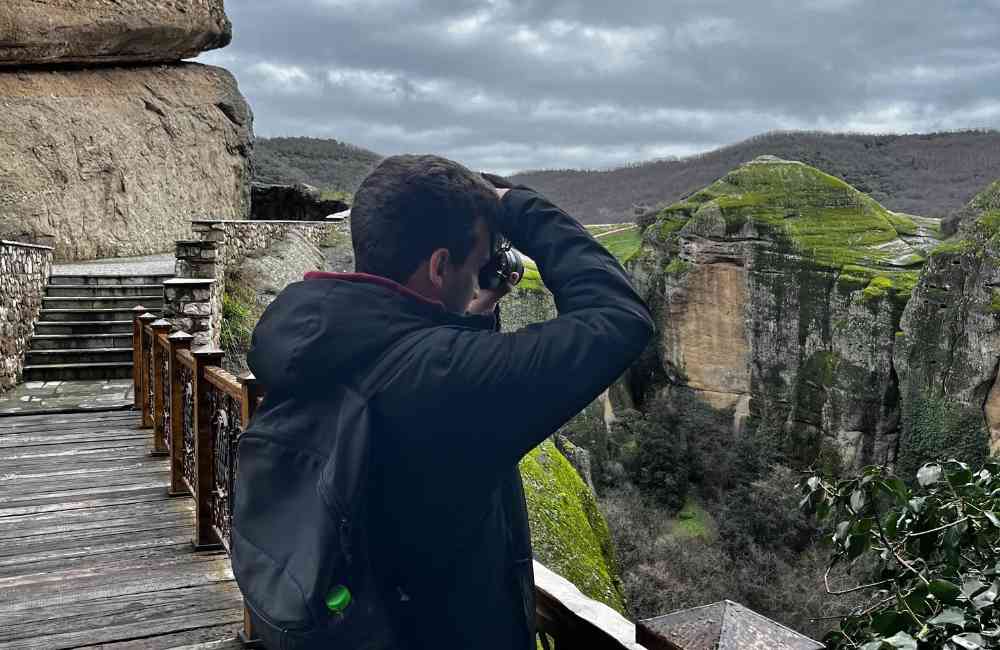
Each of the six Meteora monasteries offers something unique. Here is a quick recap:
- Great Meteoron – History and scale
- Varlaam – Museum, rope nets, wine barrel
- Roussanou – Nunnery, intimate atmosphere, famous oak honey
- St. Nicholas – Important frescoes and an intimate atmosphere
- Holy Trinity – Cinematic setting
- St. Stephen – Royal connection and easiest access
Each of the six Meteora monasteries has its own distinct character, offering visitors a unique perspective on history, art, and spiritual life. Great Meteoron, the oldest and largest of them all, impresses with its sheer scale and rich historical significance, serving as the spiritual center of Meteora for centuries.
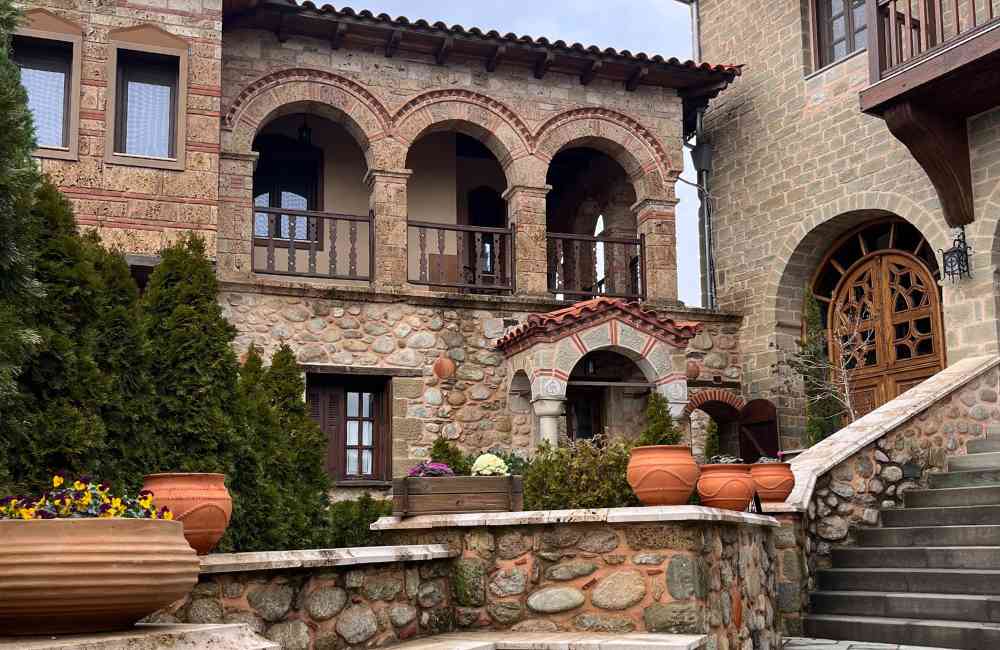
Varlaam captivates not only with its dramatic setting but also with its fascinating museum, where visitors can see the ancient rope nets used to lift monks and supplies, as well as a massive oak wine barrel — a glimpse into the daily life of the monastic community.
For a more intimate experience, Roussanou offers both charm and tranquility. This nunnery is particularly known for the exquisite oak honey produced by the resident nuns, which is celebrated across Europe.

St. Nicholas Anapafsas combines artistic brilliance with a sense of closeness, housing some of the most important frescoes in Meteora while offering a more compact, intimate setting than the larger monasteries.
Holy Trinity stands apart for its cinematic and dramatic location, perched on a solitary pillar of rock that has made it one of the most photographed monasteries in the world.
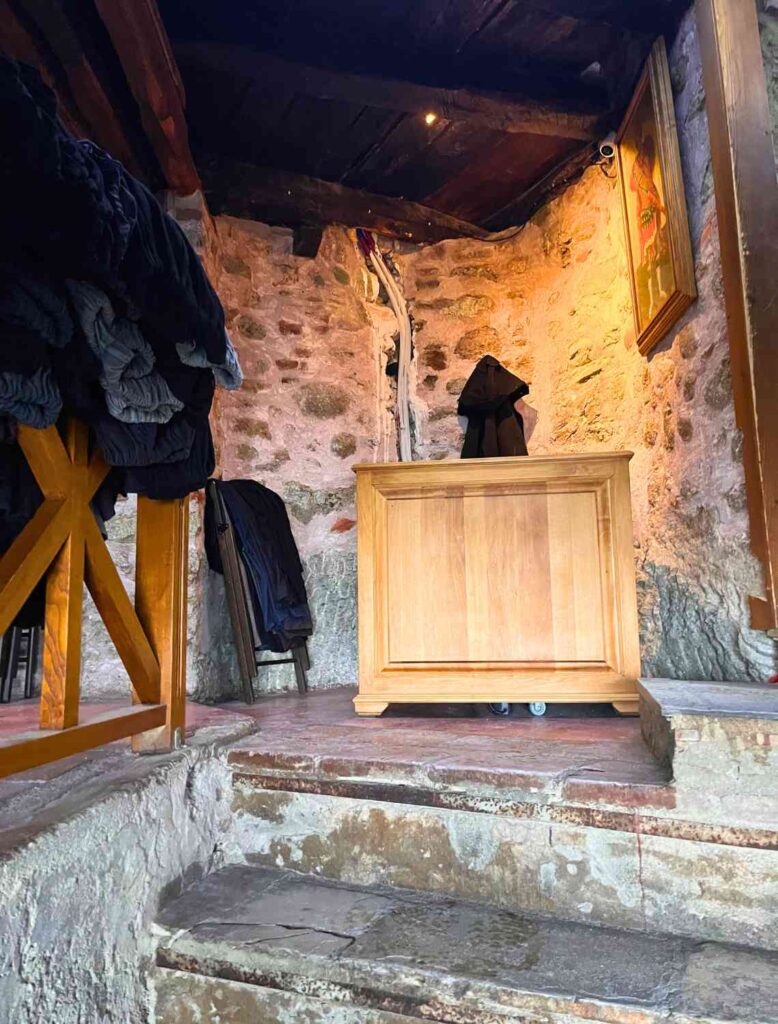
Finally, St. Stephen is notable for its royal connection — historically visited by Byzantine royalty — and for being the most accessible monastery, requiring no steep climb to enter. Together, these six monasteries offer faith, art, history, and architecture, each contributing a different story to the awe-inspiring landscape of Meteora.
Keep in mind!
Meteora is the second most visited destination in Greece after the Acropolis, and once you stand beneath those towering rock pillars crowned with centuries-old monasteries, you immediately understand why. Its popularity means that tours — especially the well-organized half-day Meteora tours — often sell out, particularly from spring through autumn. I highly recommend booking the half-day Meteora tour with the company I personally used, as it offers a relaxed, informative experience without the stress of navigating on your own. Make sure to reserve your spot in advance to avoid disappointment, as last-minute availability can be very limited during peak season.
Accommodation near Meteora
- In Trikala, we suggest Hotel Padelidaki
- In Kalambaka, one of the most popular hotels is the Divani Meteora Hotel
- In the small village of Kastraki, you can stay at Meteora Heaven and Earth Kastraki
→ You might also want to read How to get from Trikala to Meteora and Meteora Day Trip.
Pin for Later!
The 6 Meteora Monasteries

Gabi Ancarola
I have been living in Chania, Crete, since 2016. This has given me an intimate knowledge of Greece. In Crete, I’m a travel writer and also host culinary experiences. I co-authored DK Eyewitness Top 10 Crete. I write about Crete at Crete Insider and about Greek food at My Cretan Recipe.


