Standing on the Edge of Awe: A First-Time Visit to Meteora
Some places just stop you in your tracks. Not because they’re loud or because you’ve seen them before — but because they feel almost unreal when you finally see them in person. Meteora is like that.
This post has affiliate links. If you make a purchase, I might make a small commission at no extra cost to you.
You drive for quite a while on a flat, ordinary road. Nothing really hints at what’s coming. And then suddenly — there they are. Huge rock pillars rising straight out of the ground. No transition, no warning. You slow down without even thinking about it. Whatever image you had in your head? It wasn’t this.
That first glimpse stays with you.
Nothing quite prepares you for that first moment.
When scale becomes silence

Photos don’t really explain Meteora. They show the height, yes. But they don’t show how it feels to stand underneath those rocks and look up. They’re massive. Solid. Quiet. You feel very small — not in a bad way, just aware.
At first, you might not even notice the monasteries properly. They blend into the rock until your eyes adjust. And then you realize — people built those. Up there. It changes everything. These weren’t built for tourism or convenience. They were built because someone wanted to be far from the world.

This is not a place shaped for visitors. It is a place shaped by retreat.
And standing there, you feel that intention.
If it’s your first visit, give yourself a few minutes before rushing inside the first monastery. Stand back. Look up. Let your eyes adjust to the scale of it all.
Moving through the landscape

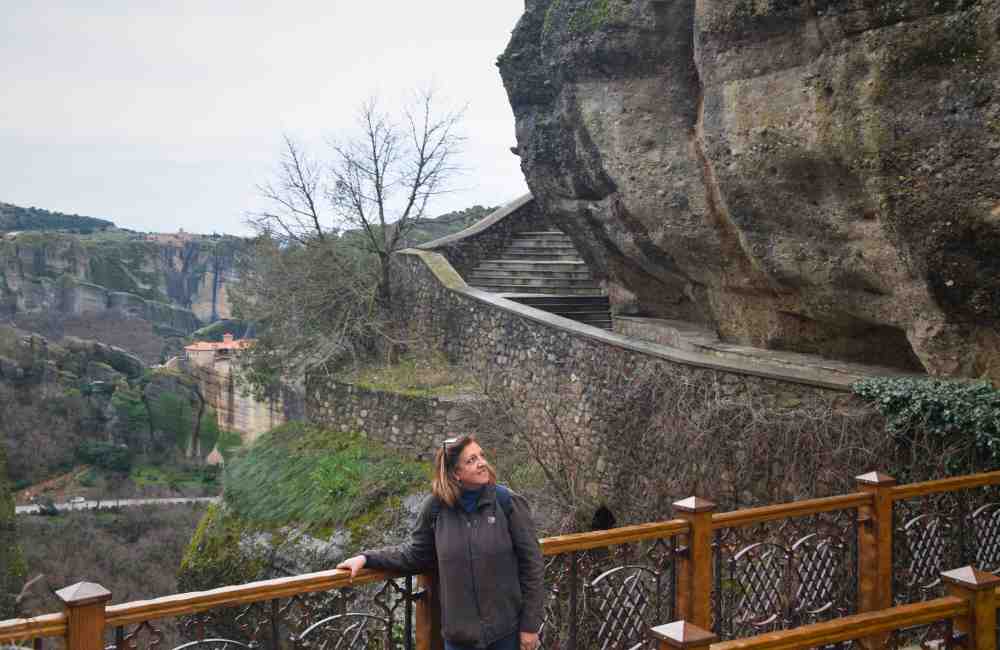
Meteora isn’t something you “do” quickly. Yes, there are monasteries to visit and viewpoints to stop at. But what stays with you are the in-between moments. A turn in the road where the rocks suddenly look different. A set of stairs carved in the stone. A quiet viewpoint where the valley opens up below.
Every angle changes the experience. On one side, the rocks feel overwhelming. From another, they feel almost close enough to touch.
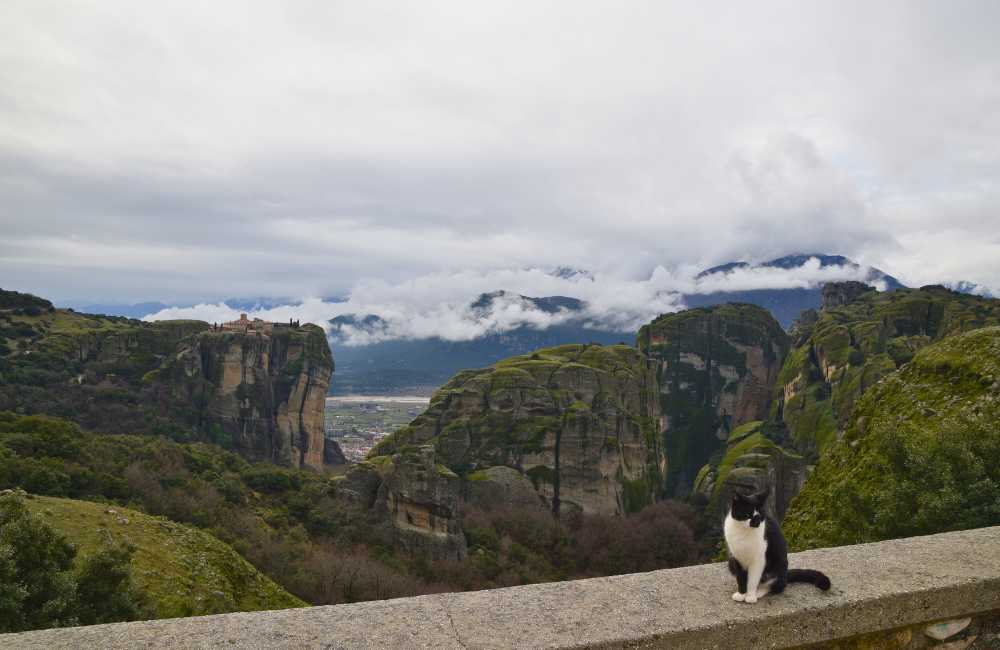
If you’re planning your route, don’t just think in terms of “how many monasteries.” Think in terms of rhythm—alternate visits with viewpoints. Walk a short stretch instead of driving every single time. Meteora reveals more when you move through it slowly.
Most first-time visitors arrive with a plan. But the best moments usually aren’t on the checklist.
The balance
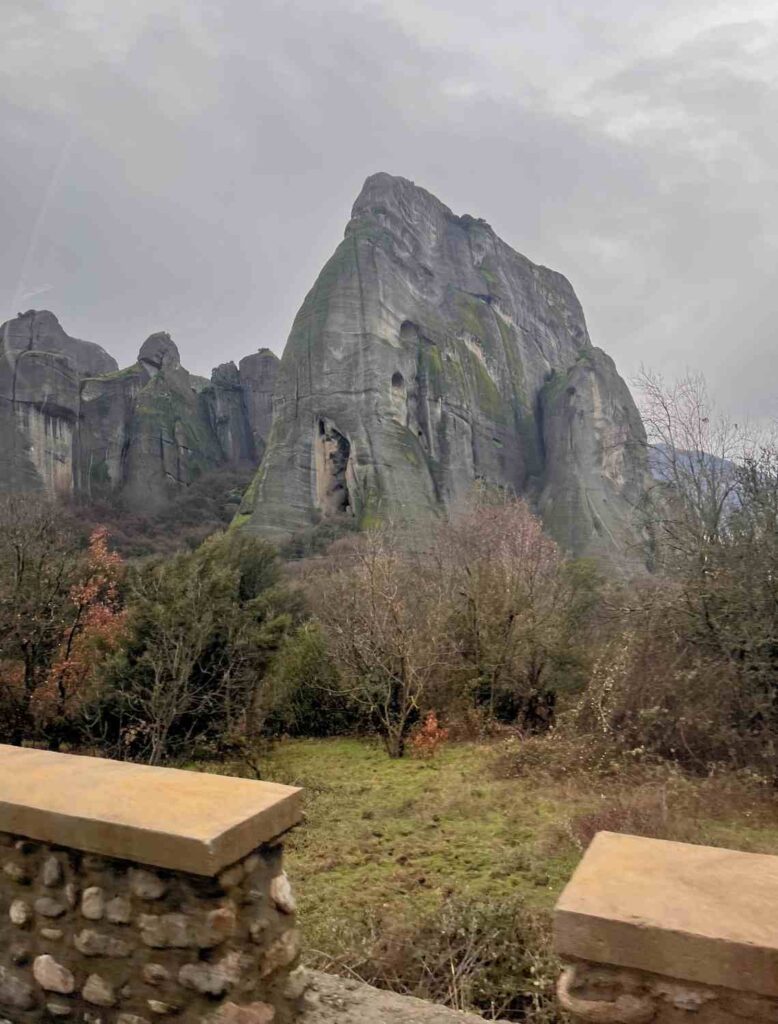
What makes Meteora unique is not only its scale, but its balance. The heavy stone is matched by the sky. The monasteries do not dominate the landscape but sit quietly within it.
Nothing feels forced. This tension between human effort and natural force creates a quiet humility.
You start to notice small things — the wind, the way the light changes, the silence between passing cars. It’s not dramatic. It’s grounding. Meteora asks very little of you, except attention.
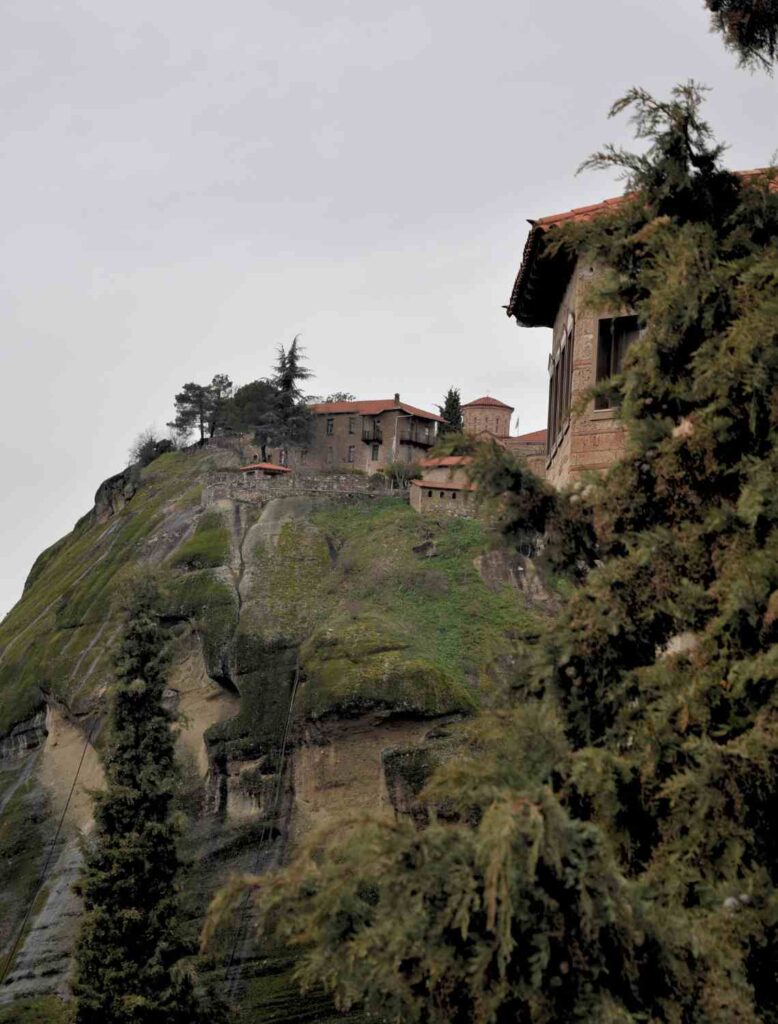
If you can, stay until late afternoon. The light softens, the tour buses thin out, and the rocks take on warmer tones. It’s a different atmosphere from midday — calmer, more reflective.
Pause & slow down
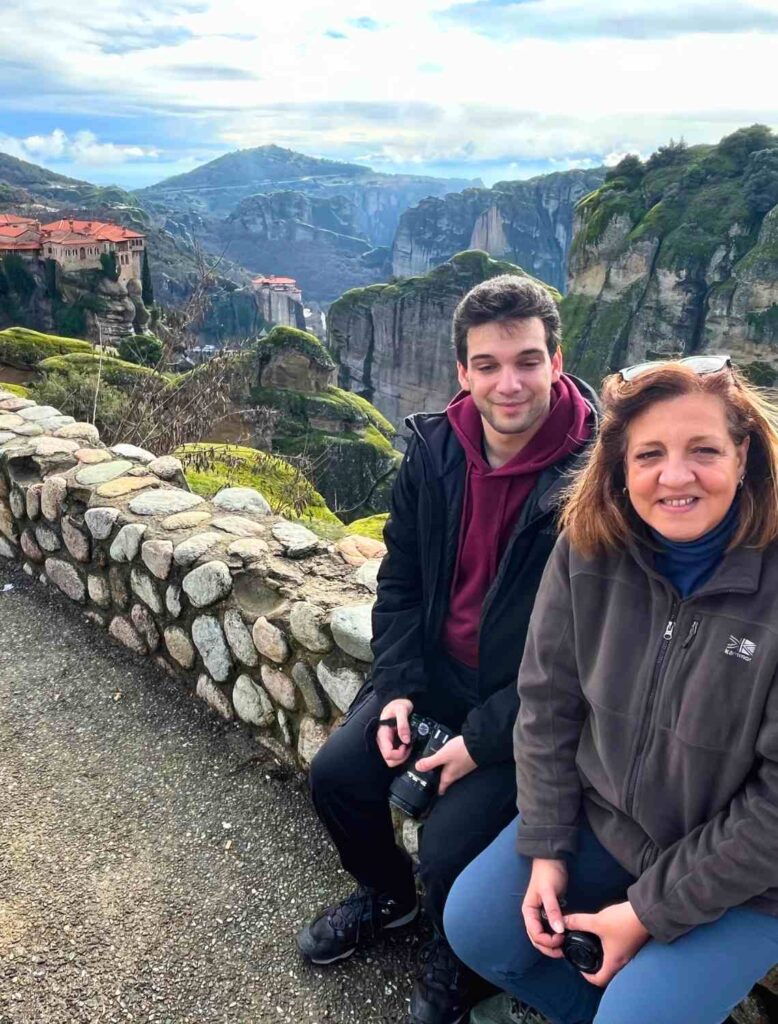
The temptation is to see everything. To move quickly. To collect views. To see all six monasteries, hit every viewpoint, and take all the photos.
But Meteora isn’t really about rushing. It’s better when you pause. Sit for a minute. Put the phone down. Watch the shadows move across the rocks.
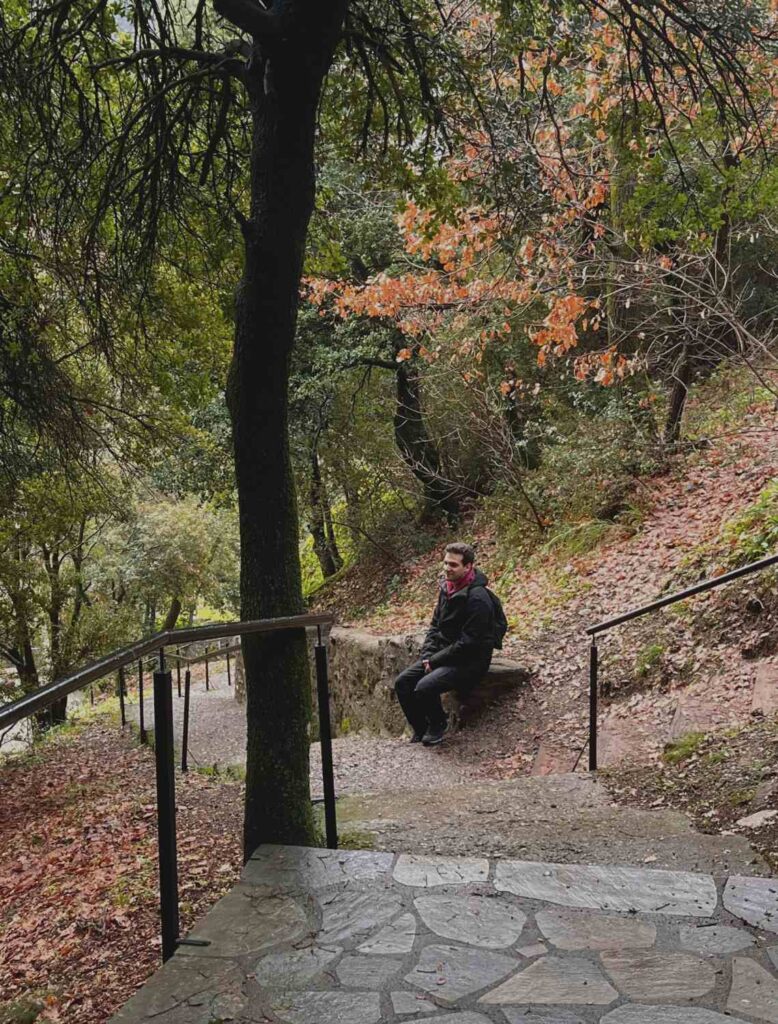
Those are the moments that stay with you after the visit ends.
Leaving with more than images
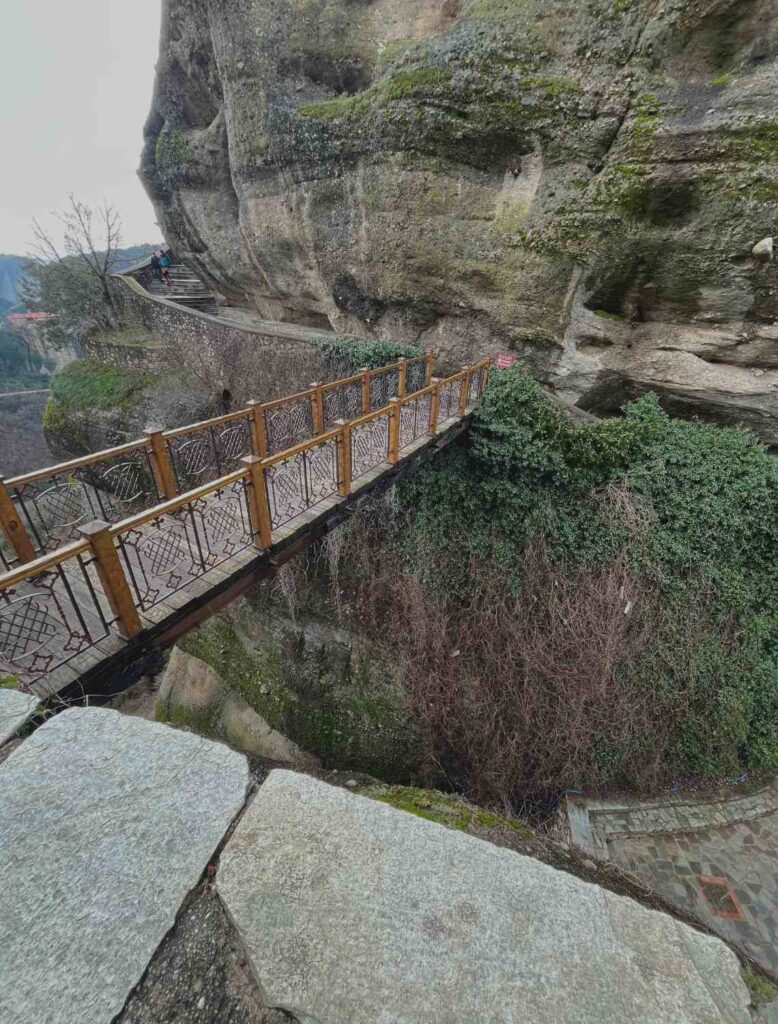
A first visit to Meteora often feels unfinished; it rarely feels “done.” Not because something was missed, but because something was opened.
There is more here than can be grasped in a single visit, or even in a single lifetime. And perhaps that is the point.

The place feels bigger than one trip. You leave knowing you’ve seen something special. And also knowing you’d come back in a heartbeat.
For those who want to go deeper
Some travelers choose to experience Meteora not as a series of stops, but as a guided, unhurried journey shaped around context, walking, and storytelling.
For those drawn to a deeper understanding of the landscape and its history, exploring such experiences can add a meaningful layer to a first visit — without taking away from its sense of wonder.

→ Check out the sunset tour too.
→ You might enjoy reading other articles to prepare for a Meteora trip, check out:
Keep in mind!
Meteora is the second most visited destination in Greece after the Acropolis, and once you stand beneath those towering rock pillars crowned with centuries-old monasteries, you immediately understand why. Its popularity means that tours — especially the well-organized half-day Meteora tours — often sell out, particularly from spring through autumn. I highly recommend booking the half-day Meteora tour with the company I personally used, as it offers a relaxed, informative experience without the stress of navigating on your own. Make sure to reserve your spot in advance to avoid disappointment, as last-minute availability can be very limited during peak season.
Pin for Later!
First Time in Meteora

Gabi Ancarola
I have been living in Chania, Crete, since 2016. This has given me an intimate knowledge of Greece. In Crete, I’m a travel writer and also host culinary experiences. I co-authored DK Eyewitness Top 10 Crete. I write about Crete at Crete Insider and about Greek food at My Cretan Recipe.