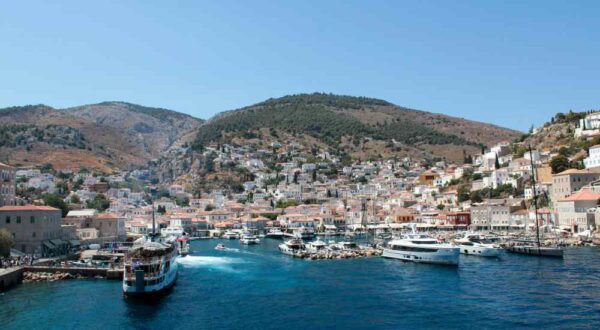
Guide to Island Hopping in Greece: Travel Tips for Ferries and Planes + Classic 7-Day Itinerary
In this guide, you will find essential information to travel the Greek islands like a pro, either by ferry or plane. It also include a classic 7-day itinerary that will make it easy for you to plan your Greek island getaway!
This post has affiliate links. If you make a purchase, I might make a small commission at no extra cost to you.
Greece is a fantastic country with over 6,000 islands scattered across the Aegean and Ionian Seas. It is known for its sun-drenched beaches, ancient ruins, and quaint whitewashed villages.
Since each island features a diverse landscape and unique experiences, the best way to get to see more of the country is to go island hopping.

The beauty of Greek islands lies not just in their diversity—each offering its own culture, history, and landscapes—but in the ease with which you can explore them, thanks to the well-developed ferry and flight systems.
In this guide, I will tell you everything you need to know about island hopping in Greece, from ferry travel tips to flying between islands. I will also help you with a classic 7-day itinerary, ideal for first-time visitors, to make the most of your time exploring Greece!
Why Island Hopping in Greece?
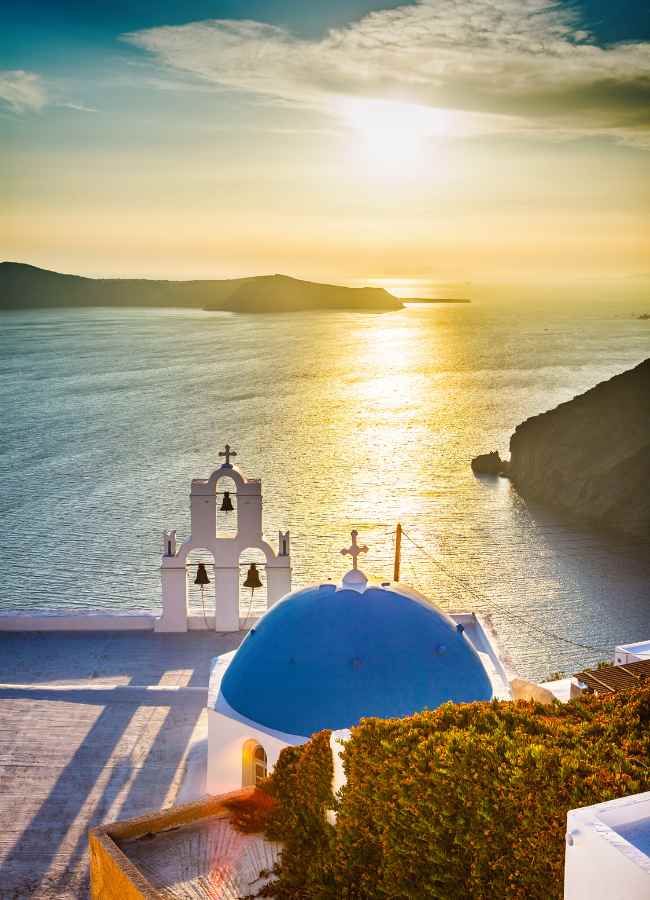
Island hopping allows you to experience multiple destinations and different islands in one trip. Greece’s islands range from world-renowned Santorini and Mykonos, to hidden gems like Folegandros and Koufonisia.
To put it short, island hopping allows for:
- Variety of Experiences
In one trip, you could enjoy the archaeological wonders of Delos, the nightlife of Mykonos, the scenic beauty of Naxos, and the tranquility of Milos.
- Ease of Travel
Travel in Greece includes ferry and flight options, making it simple and affordable to get from one island to another. This way, exploring different parts of the country will be easier than you imagine.
- Scenic Journeys
It doesn’t really matter if you choose to travel by plane or ferry, getting from one island to another will offer an unforgettable experience, made of blue waters, white-washed buildings, and rugged coastlines.
Ferry Travel in Greece

Why Choose Ferries?
Ferries are by far the most common and popular mode of transport for island hopping in Greece. It’s also the most affordable and the usual way locals choose to move from one destination to the other. Ferries offer a unique travel experience with spectacular views of the sea.
Besides, the Greek ferry system is efficient, well-connected, and provides a variety of services ranging from large ferries to smaller high-speed boats.
Advantages of Traveling by Ferry
- Affordable
Ferries are often cheaper than flying, especially for short distances.
- Relaxed Experience
You can stretch out, enjoy the sea breeze, and take in the views from the deck.
- Great Connectivity
Almost all islands are connected by ferries with different frequency schedules that usually increase in summer. This makes traveling very flexible.
- Access to Remote Islands
Some of the more remote islands may only be accessible by ferry.
Types of Ferries
- Conventional Ferries
These large ferries are ideal for long-distance trips. They often have several amenities on board, including cafes, lounges, and even cabins for overnight journeys. These ferries are slower, but they offer a comfortable ride and can carry both passengers and vehicles (including cars, bikes, and even buses).
This is the right choice for those who are not in a ruch and can afford to spend quite some time traveling from one island to the other.
- High-Speed Ferries
For quicker travel, high-speed catamarans and hydrofoils are available. These are faster and more comfortable than conventional ferries, though they tend to be more expensive. They are best for shorter distances, where speed is a priority, however, it’s important to know that bad weather conditions can affect schedules.
- Local Ferries (Passenger Ferries)
Local, smaller ferries connect less-touristy or more remote islands. These ferries can be more rustic, with fewer amenities, but they offer a more intimate way to travel and are often cheaper.
Booking Ferries
- Ferry Companies
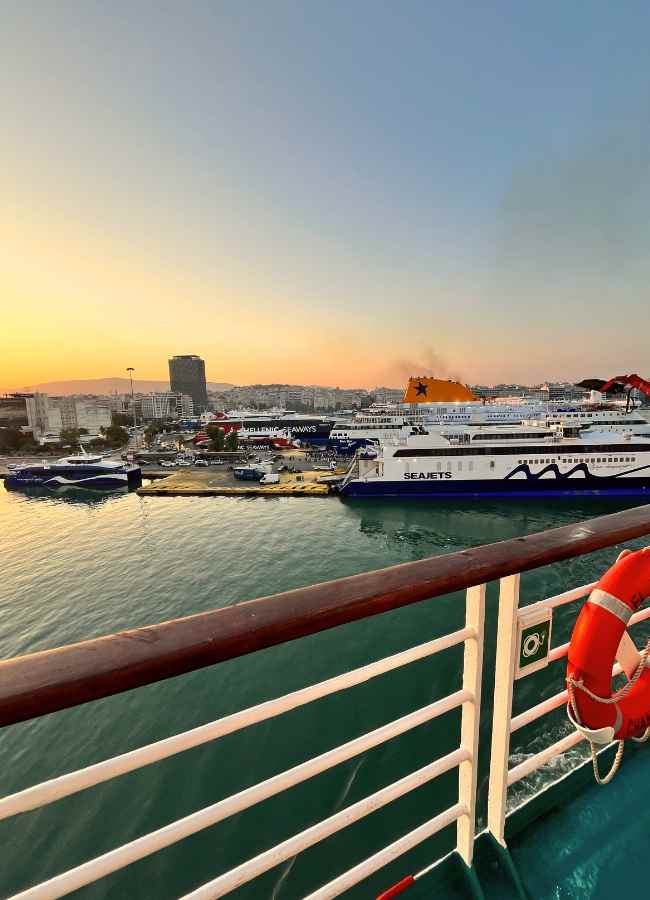
Some of the main ferry companies operating in Greece are Blue Star Ferries, Hellenic Seaways, Anek Lines, and SeaJets.
- Booking Platforms
Websites such as Ferryhopper (the one I use) or the official websites of ferry companies allow you to book tickets in advance. You can choose between one-way tickets or round trips for flexibility. Using these platforms is also possible to book car transport if you’re traveling with your car.
- Ticket Types
You can usually choose between standard seats, business class seats, or a cabin (if traveling overnight).
- Booking Early
Especially in the summer months (June to September), ferries can get crowded, so it’s advisable to book in advance to secure your spot.
Ferry Routes and Timetables
- Greece has well-established ferry routes connecting the mainland to its islands, and the islands themselves. For example, you can easily travel from Athens (Piraeus Port) to Santorini, Mykonos, Naxos, and Crete, and there are also routes connecting islands like Paros, Ios, and Milos.
- Ferry Timetables
Ferries run frequently during peak season, but schedules can be affected by weather conditions, especially in the winter months. Always check the ferry schedules ahead of time.
Tips for Traveling by Ferry
- Arrive Early
Especially if you have a car or plenty of luggage, it’s recommended to arrive at least 30-60 minutes before the departure.
- Seasickness
If you’re prone to seasickness, consider taking motion sickness pills or sea bands before your trip.
- Pack Smart
Bring water, snacks (which can be expensive onboard), and sunscreen if you’re taking a longer journey, especially during the summer.
- Check for Delays
Ferries can sometimes be delayed due to weather conditions or rough seas, so always allow some buffer time if you have connecting ferries or flights.

Flying Between Islands in Greece
While ferries are the most common way to travel between islands, flights can sometimes be more efficient, particularly when traveling long distances or during the peak season when ferry schedules can be very crowded.
Why Choose Flights?
- Time-Saving
Flights are faster, especially for longer distances (e.g., from Athens to Crete or Santorini to Rhodes).
- Airports
Many Greek islands have regional airports. Santorini, Mykonos, Crete, Rhodes, and Corfu are among the busiest.
Airlines
- The main airlines operating within Greece for island flights include Aegean Airlines, Olympic Air, and Sky Express.
- Charter Flights
During peak season, several European charter airlines may offer seasonal flights connecting islands with more limited routes.
Flight Tips
- Book in Advance
Flights, particularly to popular destinations like Santorini, Mykonos, or Crete, can fill up quickly, especially in the summer. Booking early ensures better availability and rates.
- Smaller Airports
Be prepared for smaller, regional airports, which may not have the same level of amenities as larger international airports.
- Airport Transfers
Make sure to arrange your transfer from the airport to your hotel or accommodation, as airports on islands can be a bit far from the main towns.

How to Plan an Island Hopping Itinerary
Planning an island-hopping itinerary depends on how much time you can spend in Greece, the things that interest you and your travel mates, and the type of islands you want to visit. Here’s a sample plan for a 7-day island-hopping adventure in Greece:
Classic 7-Day Greek Island Itinerary
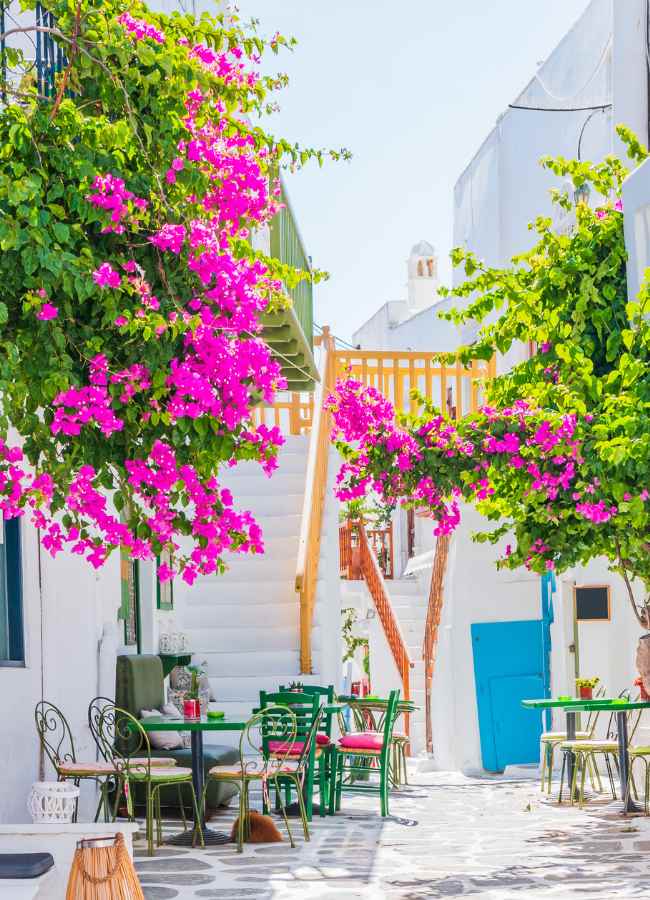
If you have 7 days to explore Greece, you can easily fit some time in Athens, as well as three of the most iconic islands. This particular itinerary has been designed trying to include a variety of interests, including culture, adventure, and relaxation. Let’s dive into it!
Day 1: Arrival in Athens

Unless you’re flying with a chafrter flight, your journey will normally begins in Athens, the capital of Greece. In that case, I suggest spending your first day exploring its ancient sites and incredible historic places.
These are some of the acitivities I recommend:
- Morning
Arrive in Athens and check into your hotel. Start your exploration with a visit to the Acropolis, home to the Parthenon, the Temple of Athena Nike, and the Erechtheion. These landmarks are essential to understanding Greece’s rich cultural heritage.
- Afternoon
After a quick lunch in Plaka, near the Acropolis, head to the Acropolis Museum (just a few steps away) to learn more about the Acropolis and check out the sculptures and artifacts recovered from the Acropolis.
- Evening
You can walk along Ermou Street and reach Syntagma Square, to see the iconic changing of the guards at the Greek Parliament. For dinner, I suggest heading to nearby Monastiraki and enjoy dinner at a rooftop restaurant with views of the Acropolis.
- Overnight: Athens
Day 2: Athens to Mykonos
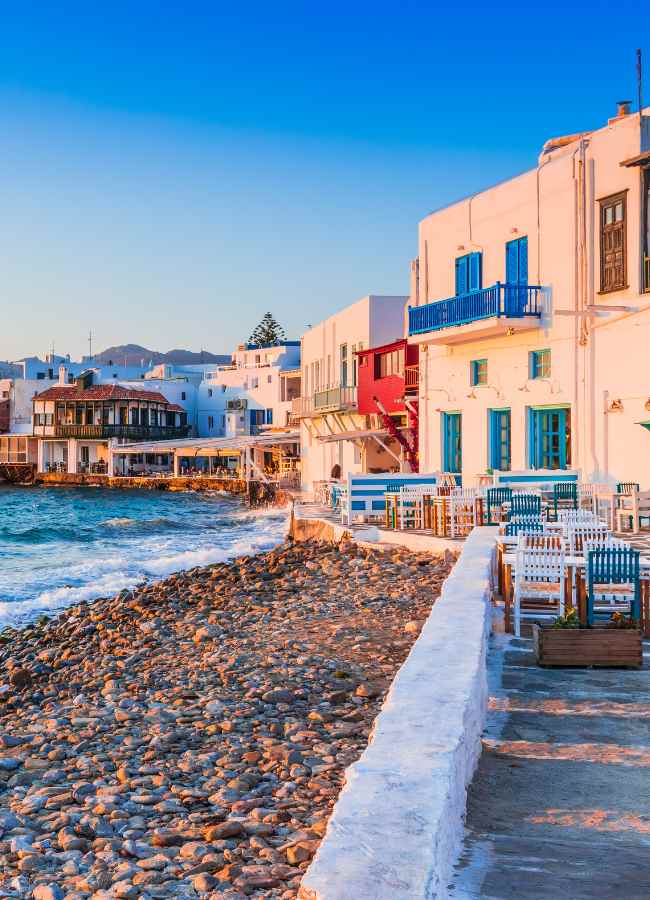
Wake up early and head to Piraeus Port (or the airport, if you travel by plane). After a day exploring Athens’ ancient history, it’s time to trael to to one of the most famous Greek islands: Mykonos!
- Morning
Catch a ferry from Athens to Mykonos (approximately 4 hours by ferry, or 30 minutes by plane). Once you arrive, check into your hotel and get ready to explore the island.
- Afternoon
Start your Mykonos adventure by wandering the whitewashed alleys in Mykonos Town (Chora). Discover the narrow alleys and the iconic windmills by the sea. From there, head to the fantastic Little Venice, a picturesque waterfront area with cafes and boutiques where you can also explore the unique Panagia Paraportiani whitewashed church.
- Evening
Enjoy a sunset cocktail at Kato Mili, the famous windmills of Mykonos, followed by dinner at one of the beachside restaurants, where fresh seafood is a must-try.
- Overnight: Mykonos
Day 3: Explore Mykonos Beaches

Mykonos is known for its lively beach scene. I believe that some of the best beaches in Greece can be found in Mykonos, so enjoy som relaxing time and spend a day lounging by the sea.
- Morning
Depending on where on the island you’ve picked accommodation, you could choose a beach close to the main town or near a small village. I always suggest heading to Psarou Beach, famous for its crystal-clear waters and luxury beach clubs. If you’re looking for something more relaxed, Agios Stefanos, Platis Gialos, and Elia Beach offer a more tranquil vibe.
- Afternoon
If you travel with the family or enjoy some adrenaline, why not try out water sports like windsurfing, kite surfing, or parasailing? It you prefer a more quiet expriences, simply relax on the beach.
Instead, if you’re curious about Greek history and mythology, it can be a good idea to take a boat trip to the nearby Delos Island, a UNESCO World Heritage site with remarkable archaeological ruins.
- Evening
Head back to Mykonos Town for dinner and enjoy a lively evening out at one of the many bars or clubs that make Mykonos famous for its nightlife.
- Overnight: Mykonos
Day 4: Mykonos to Santorini

On the next day, you can sail to Santorini, one of the most iconic islands in the Aegean. Since both islands are quite close to each other, in this case, I suggest preferring the ferry over the plane.
- Morning
Take a ferry to Santorini (about 2 hours by ferry). Get to the island and take a taxi to your next accommodation. After checking in, take a moment to appreciate the island’s breathtaking scenery with its cliffs, whitewashed buildings, and azure waters.
>> I always suggest finding accommodation in Fira if you do not have so much time to spend on the island. It’s close to the airport and a great base to explore the island.
- Afternoon
From Fira, grab a taxi or take the local bus to get to the charming town of Oia, on the northernmost tip of the island. This place is worldwide famous for its postcard-perfect sunset views. Try to get there early in the afternoon to have enough time to wander through the narrow streets, browse the local art galleries, and enjoy the spectacular views over the caldera before the sun sets.
- Evening
After witnessing the famous Santorini sunset from the ruins of Oi castle, you can have a romantic dinner at a restaurant with a view of the caldera.
- Overnight: Santorini
Day 5: Santorini’s History & Beaches

Santorini shelters unique volcanic landscapes, and some truly unique beaches you will not find on any other Greek island!
- Morning
If the history of this island makes you curious, begin your day by visiting the ancient ruins of Akrotiri, a Minoan Bronze Age settlement that was preserved by a volcanic eruption. You can also explore the Museum of Prehistoric Thira for more insights into the island’s history.
Alternativley, if you are not so keen on learning about Akrotiri, you can go for a wine tasting tour. Santorini produces some of the best wines in Greece and there are several wineries offering fantastic tasting experiences.
- Afternoon
Spend the afternoon at one of Santorini’s famous beaches, such as Red Beach not far from the Akrotiri ruins. Red Beach, with its dramatic red cliffs, is a must-see. Alternatively, you can enjoy the more peaceful atmosphere at Perissa Beach, one of Santorini’s black beaches.
- Evening
After a day of exploration, treat yourself to dinner at one of the cliff-side restaurants in Fira, where you can savor fresh local specialties like fava beans and grilled octopus.
Overnight: Santorini
Day 6: Santorini to Crete

Next, hop on a ferry to Crete, the largest and most diverse Greek island. If you want to make the most of your visit, I suggest flying to Crete.
- Morning
Arrive in Heraklion, the capital of Crete. Begin your day with a visit to the Palace of Knossos, the largest archaeological site of the Minoan civilization. Explore the ruins, which are thought to be the legendary labyrinth of King Minos.
>> Stop for a snack and a fresh orange juice in any of the tavernas near the archaeological site!
- Afternoon
Head to Heraklion Archaeological Museum to see impressive Minoan artifacts. If you prefer to see Heraklion city instead, head to the old port and explore the Venetian Rocca a Mare, an ancient fortress also known as Koules. You can also stroll through the Venetian walls for panoramic views.
- Evening
It’s a good idea to take a walk along 25th August Street, check out the Loggia and Saint Titus Church. You can also visit the Lion’s Fountain.and have dinner at a local taverna for traditional Cretan dishes like dakos.
- Overnight: Heraklion, Crete
Day 7: West Crete

On your last day, experience the gorgeous western region of Chania. I suggest getting up early as the road trip to Chania can take up to three hours (by bus). You can also drive there to save some time.
- Morning
Drive to Chania, Crete’s most beautiful town on Crete’s northwestern coast. Explore its Venetian Harbor, the old town, and the picturesque buildings in the historic district.
- Afternoon
It could be a good idea to drive to Elafonisi Beach (a bit more than an hour from the city center) to visit one of the most stunning beaches in Crete. With its pink sand and turquoise waters, it’s the perfect place to relax and soak up the sun. if you’d rather not spend so much time onthe road, visit one of the beaches in the Akrotiri Peninsula, closer to the city center and still very beautifu.
- Evening
Enjoy a farewell dinner in Chania old town, overlooking the harbor, and savor local specialties like lamb with herbs and Cretan cheese.
Overnight: Chania, Crete (or departure from Chania Airport)
This 7-day Greek island itinerary is great for a first-time visit to Greece, allowing you to marvel at fantastic landscape, discover the country’s history, and enjoying its gastronomy and stunning beaches!
As you can see, with a little planing, it’s not difficult to experience the best of what Greece has to offer in just one week!
Pin for Later!
Island-Hopping in Greece & Classic 7-Day Itinerary


Gabi Ancarola
I have been living in Chania, Crete, since 2016. This has given me an intimate knowledge of Greece. In Crete, I’m a travel writer and also host culinary experiences. I co-authored DK Eyewitness Top 10 Crete. I write about Crete at Crete Insider and about Greek food at My Cretan Recipe.