Athens Mythology Tour: A Walking Tour in Ancient Athens
This tour is a mythological proposal for you to discover the past of Greece’s stunning capital. Explore Athens and its past walking the ancient sites and landmarks through a mythological tour.
This post has affiliate links. If you make a purchase, I might make a small commission at no extra cost to you.
Why a Mythology Tour of Athens? There are many walking tours in Athens: Morning tours, night tours, food tours, alternative tours, and even street art ones! This time, I chose a tour that would be perfect for families but not only!
Mythological Walking Tour of Athens
The tour reviewed below is offered by Alternative Athens.
The following are the different stops and visits that this Mythological tour of Athens includes, one better than the other one.
Check what the places we visited along the tour and what we learned…
Temple of Olympian Zeus
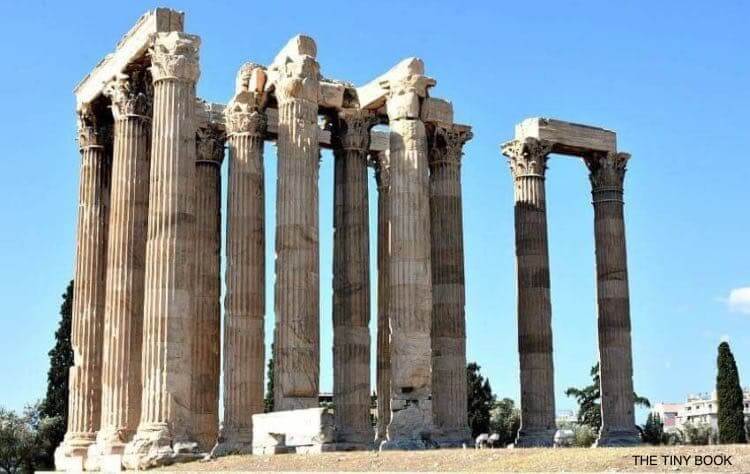
Our tour begins where it should, at the Temple of Olympian Zeus’ ruins and with one of the many Greek myths of Cosmogony.
Zeus poured heavy rains out of anger, and Deucalion and Pyrrha arrived at Mount Parnassus after drifting for nine days to give origin to a new human race.
The Temple of Olympian Zeus was started by tyrant Peisistratus around 520 BC, but works on the Temple were picked up and abandoned more than once.
The Roman Emperor Hadrian (II cent. AD) decided on the temple’s completion, among other works he intended for Athens, yet it did not live long.
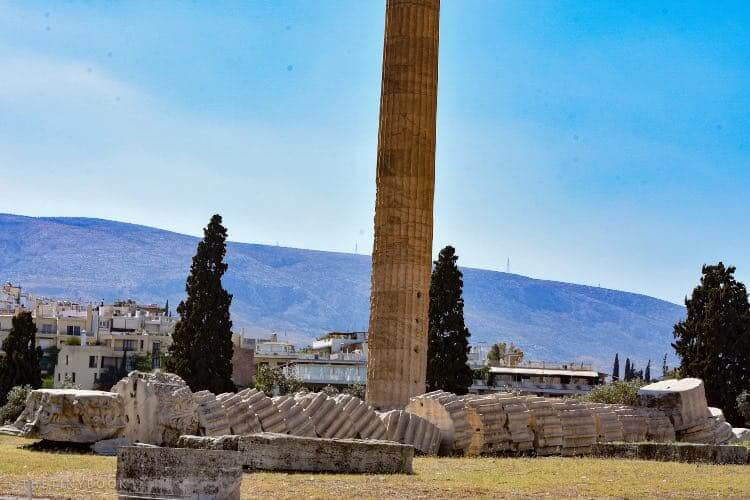
It is double the size of the Parthenon; there were originally 104 Corinthian columns, but only 15 of them remain. One of them fell during a storm in 1852 and is still visible on the ground.
The Temple of Olympian Zeus is also known as the Olympieion or Columns of the Olympian Zeus.
Arch of Hadrian
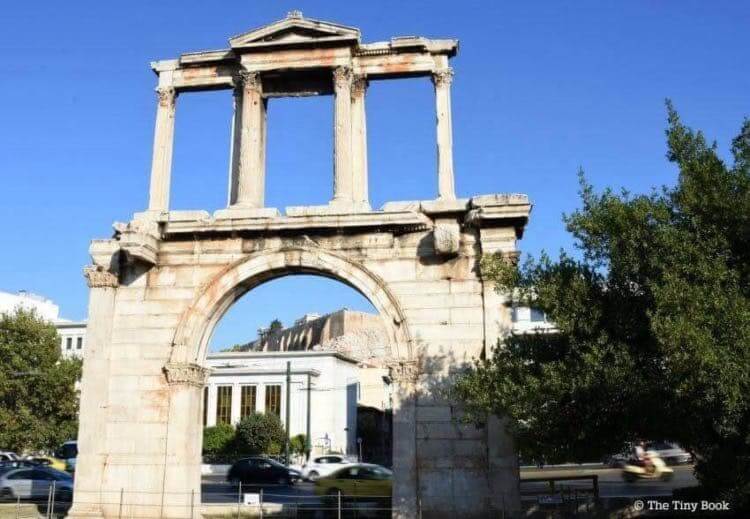
The Arch of Hadrian (also Hadrian’s Gate) was erected in 132 AD as a gate between Athens’s ancient and Roman cities. There are two inscriptions on the arch, facing opposite directions, designed by both Theseus and Hadrian as founders of Athens. Towards the Acropolis, it reads:
- ΑΙΔ’ ΕIΣΙΝ ΑΘΗΝΑΙ ΘΗΣΕΩΣ Η ΠΡΙΝ ΠΟΛΙΣ (This is Athens, the ancient city of Theseus);
on the side facing the Temple of Olympian Zeus, it says:
- ΑΙΔE ΑΔΡΙΑΝΟΥ ΚΟΥΧI ΘΗΣΕΩΣ ΠΟΛΙΣ (This is the city of Hadrian, and not of Theseus).
Our guide soothes the polemic by explaining that the first inscription faces the Classical city, founded by Theseus, whereas the second looks at the Roman expansion of the city, designing Hadrian as the second founder of Athens. Doubt remains.
Both inscriptions indeed honor Hadrian, but do they refer to the city as a whole or the city divided as the old and the new one?
Theater of Dionysus
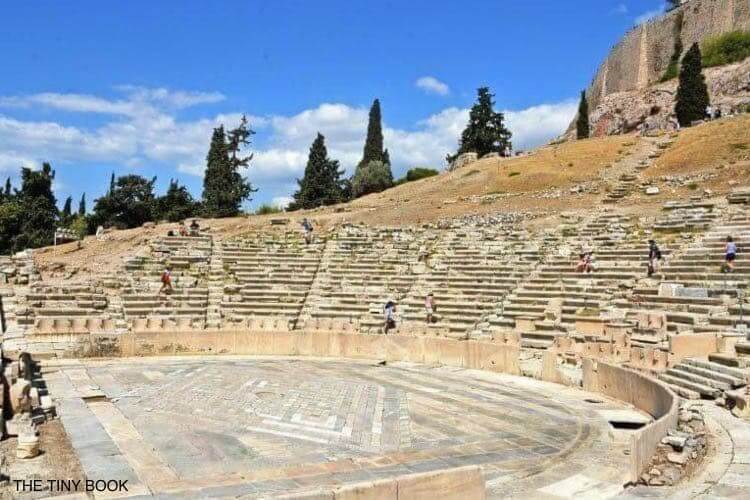
Several myths explain the origins of Dionysus. We listen to the myth of Zeus and Semele under the shadows of an olive tree in front of the Theater.
The myth tells of Zeus falling in love with mortal Semele and about his wife, Hera, finding out that Semele is pregnant. Hera, angry at Zeus, decides to get her revenge.
Hera appears to Semele in disguise and, gaining her confidence, makes Semele doubtful of Zeus. Semele makes Zeus promise that he will give her anything, so she asks him to appear to her in all his glory.
Little did she know that Gods appearing in their divine splendor were lethal to humans.
Zeus thus kills Semele with his burning flames but manages to save the unborn child by sewing him to his thigh. A few months later, the god Dionysus is born from Zeus’s leg.
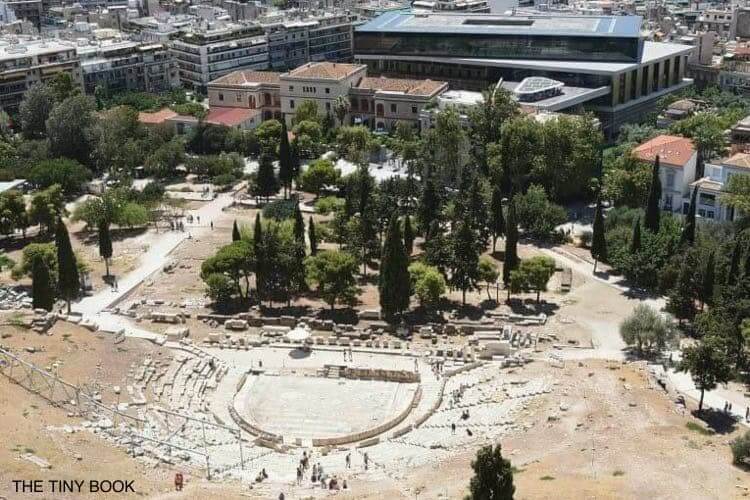
Mythology states that Dionysus lived a life of transformation, always escaping from the anger of Hera, forced to change his appearance all the time.
Therefore the god of metamorphosis, of change. Of wine and theater, since those also bring transformation, the first changes our mood, the latter brings catharsis.
This is why Dionysus is also called Eleutherius (“the liberator”) as wine, music and ecstatic dance set free from fear.
There’s no need to say we are captured by our Dionysus (our guide) and his stories…
He goes on to talk about ancient plays, how they were represented, how the rituals started at sunrise, and what a dithyramb was.
He sets an example of how and why the theater was an educational experience, he chooses Antigone. And we love it.
Temple of Asclepius
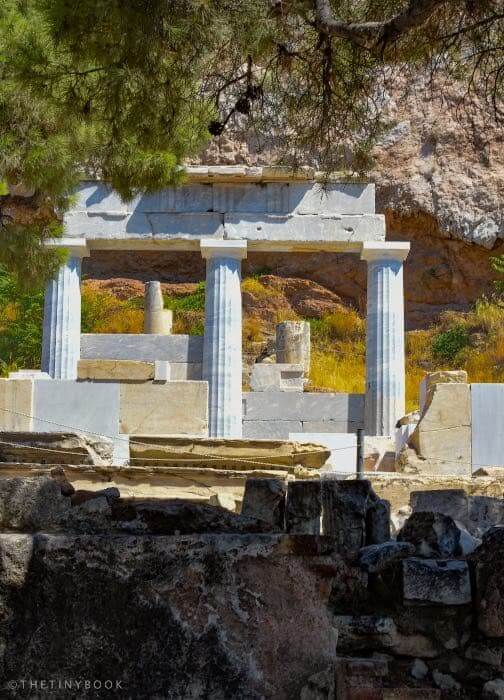
According to mythology, Asclepius, the son of Apollo, is the God of Medicine; through his studies, he becomes so skillful in medicine as to resurrect the dead, thus receiving the punishment of Zeus.
The cult of Asclepius started about 350 BC, becoming very popular with pilgrims visiting the temples to be cured.
A patient underwent two stages of healing: a purification stage or catharsis (including baths, diets, and art therapies) and the incubation stage or dream therapy when the patient slept overnight in the temple.
If you’re interested in seeing more of Athens, check out this article about what to see in Athens in one day
The Odeon of Herodes Atticus
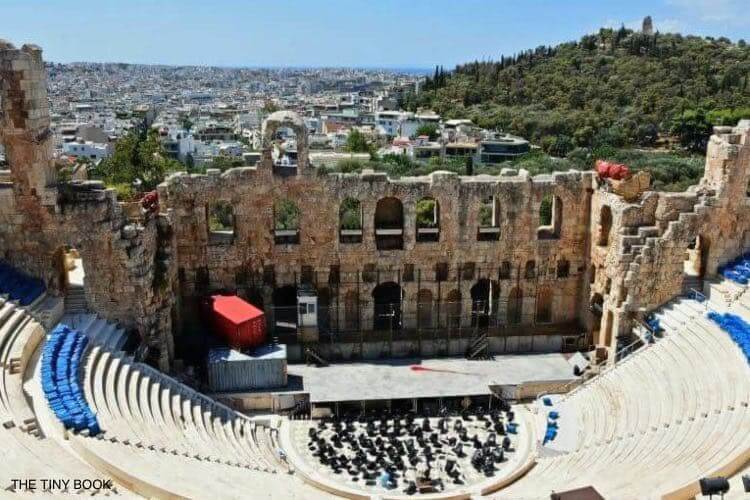
We then move on to see the impressive remains of the Odeon, built in 161 AD by the Athenian Herodes Atticus in memory of his wife Regilla.
We can hardly imagine how impressive it might have looked like with a roof made of cedar wood from Lebanon. Mainly used for musical festivals, it hosted up to 5,000 spectators.
The Odeon was destroyed in 267 BC and underwent restoration in early 1950. Since then, there have been concerts and drama performances, mainly during the Athens Festival.
Temple of Athena Nike, the Propylaea, and the Erechtheion
Temple of Athena Nike
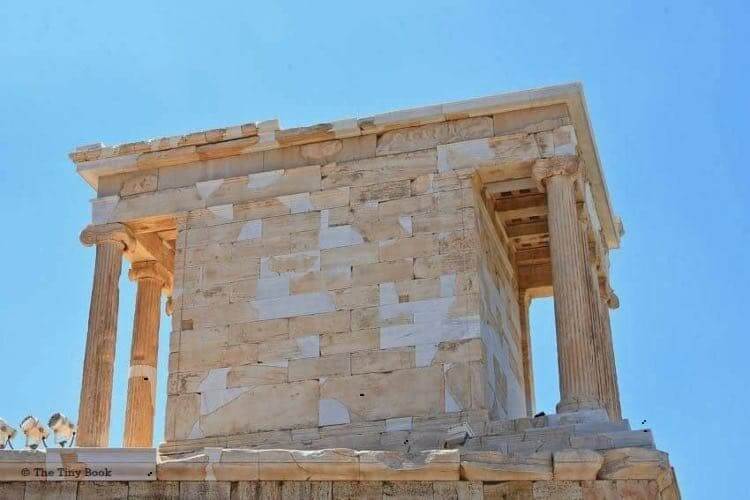
In Greek, Nike means victory, and the goddess Athena was worshipped as a goddess of victory in wisdom and war. The Temple of Athena Nike is an Ionic temple with a colonnaded portico on the front and rear facades.
They rebuilt and restored this little temple, on the right from the Propylaea, several times. Famous parts of its reliefs are now at the Acropolis Museum.
The Propylaea
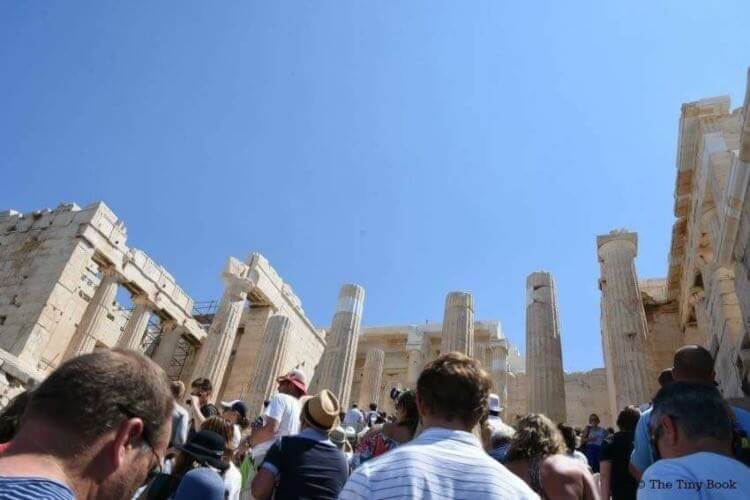
The Propylaea serves as the entrance to the Acropolis (and here, you might get stuck in the crowd!).
The construction of this monumental gateway began around 437 BC. Its columns belong to the Doric order and have the same proportion (not the size) as the ones in the Parthenon.
The function of this gateway was to control the entrance into the Acropolis: people not ritually clean could not enter the sanctuary.
The same applied to slaves. As the Acropolis was also the place where they kept the state treasury, the Propylaea played an essential role in terms of security.
The Erechtheion
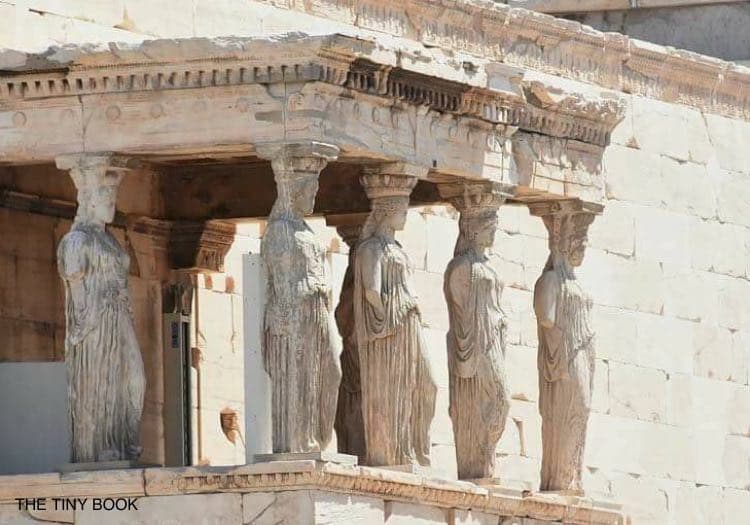
We spot the Erechtheion on the northern side of the Acropolis, erected in honor of both Athena and Poseidon. On one side there is a porch with six Ionic columns. On the southern part, the famous Porch of the Caryatid, the six beautiful female figures that also function as supporting columns.
The Erechtheion held a relation with the most ancient relics of the Athenians: the marks of Poseidon’s trident, the sacred olive tree of Athena, the supposed burial-place of the king Erechtheus, and more.
Erechtheus, one of Athens’s legendary kings, was worshipped with the Gods at the Erechtheion.
The olive tree remains on the western side of the Erechtheion, very close to the Parthenon, though it is not the original one.
The Parthenon
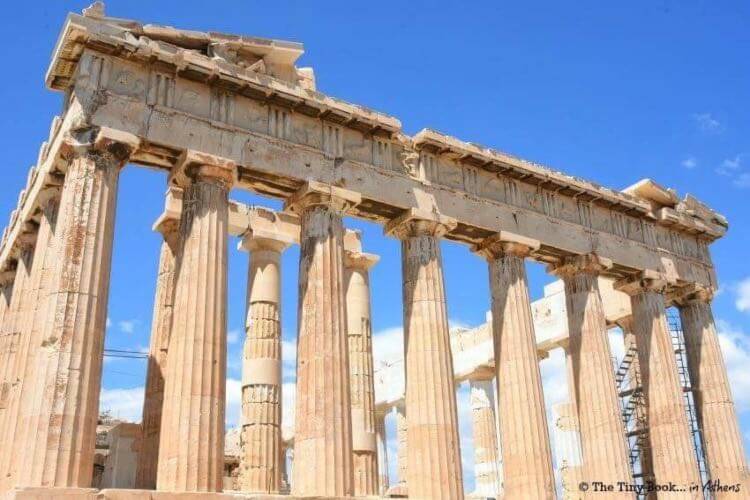
Over the years, the Parthenon has suffered from fire, revolution, war, misguided restoration, and – of course – pollution. It was a church and later a mosque. Large chunks of it were removed by the British (1801).
Restoration goes on. They are now using titanium to tie blocks and columns together. They have crafted new marble to fill in some gaps.
As experts say, you can see the new marble in a lighter color, yet one of the principles of this restoration is not to cheat the visitor. As for the color, they also say that in 10 years both colors will almost match.
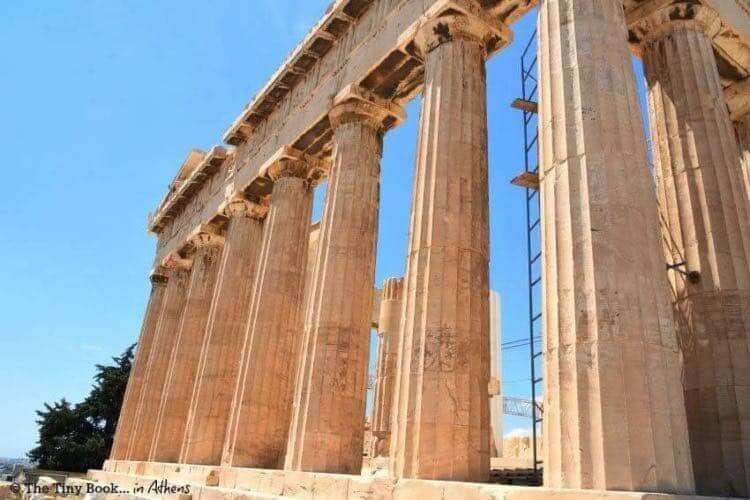
We still do not care. I know I don’t. For me, it remains an accomplished dream. And I keep looking at it. I have many pictures of Athens, but not so many of the Parthenon. I prefer to see it without the camera in between.
The Ancient Agora and the Temple of Hephaestus
We make a short stop near Plaka, a cold frappé, and a quick rest. Next up, we walk down the slippery slopes to reach the Ancient Agora quite fast.
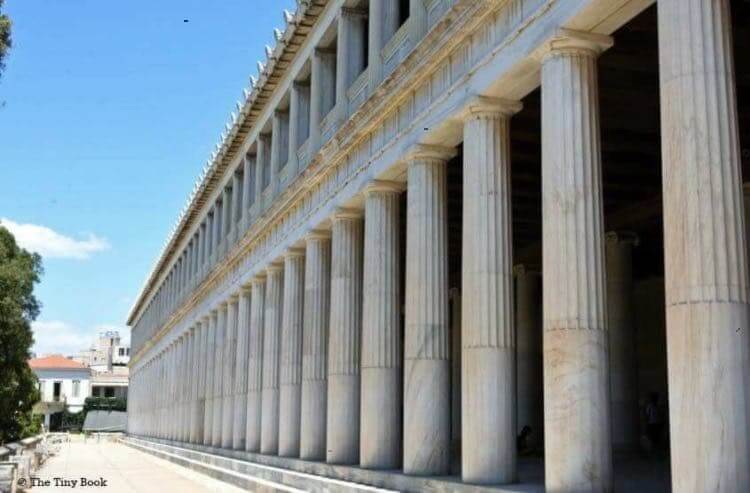
Once inside, we are soon in front of the Stoa of Attalos, built and named after King Attalos of Pergamon.
A Stoa was a covered portico, and this one underwent an impressive restoration work, allowing us to see how porticos looked in the past. This stoa now hosts the Museum of the Ancient Agora.
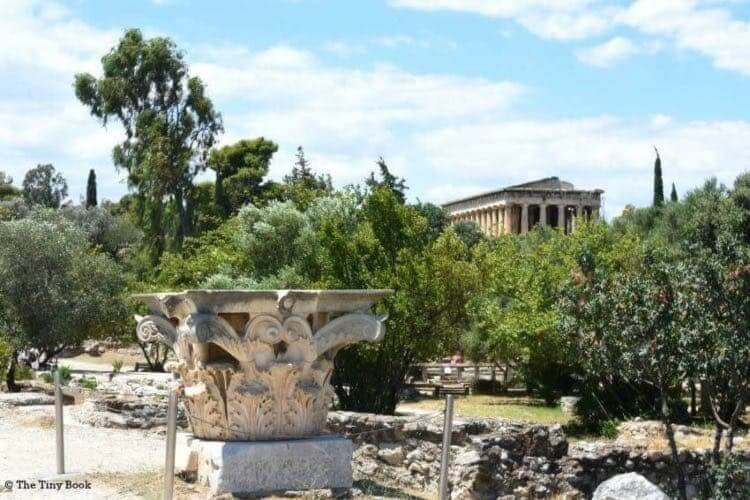
We walk up for a while to reach the Temple of Hephaestus, with its impressive intact columns of Doric order. Its great state of conservation allows for the perception of the structure and design of temples in Ancient Greece.
Several metal-working shops could be found near the temple, and being Hephaestus, the god of fire, sculptors, and blacksmiths, the relationship is quickly established.
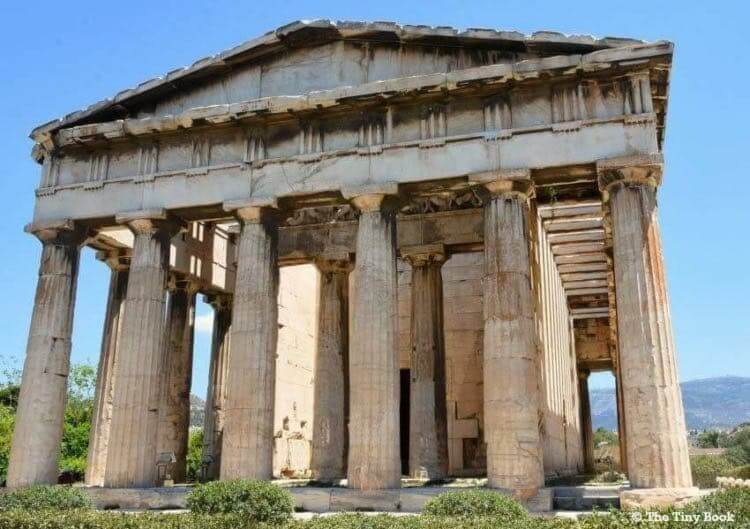
The myth our Dionysos chooses for us tells the story of Hephaestus, son of Hera. Hera rejected him because of his deformity, throwing him off of Mount Olympus and down to the Earth. Still, he remains the only Olympian to return to Olympus after being exiled.
Cemetery of Kerameikos
Our last stage approaches with a visit to the ancient cemetery, Kerameikos.
The church of Agia Triada stands in the background of this beautiful yet solitary city area; it remains an archaeological site that few people visit while in Athens.
There are two different ways to explain the cemetery’s name: some say that the area receives its name from the word keramos (Greek for pottery) because several pottery workshops populated it before it became a cemetery.
Others, instead, state that the name comes from the local hero Keramos, son of Ariadne and Dionysus.
As we see every burial monument, we learn about its symbolism and the ancient mourning traditions, some of which are still maintained.
However, what leaves the most remarkable impression of all is not the cemetery but Dionysus, our guide. He, in an attempt to convince the pride Athenians to share about their city, their history, and their legacy to the World, reads to us part of a speech given by Pericles close to the communal grave after the burial of the first dead soldier of the Peloponnesian Wars.
And it goes like this:
Our constitution does not copy the laws of neighboring states; we are rather a pattern to others than imitators ourselves. Its administration favors the many instead of the few; this is why it is called a democracy. (…) The freedom which we enjoy in our government extends also to our ordinary life. There, far from exercising a jealous surveillance over each other, we do not feel called upon to be angry with our neighbor for doing what he likes, or even to indulge in those injurious looks which cannot fail to be offensive, although they inflict no positive penalty.
And there we stand, full of that mesmerizing spirit of the past, still so alive in modern Athens. There we stand, at the end of this incredible experience, under the burning sun of Athens.
Athens Mythology Tour, and More!
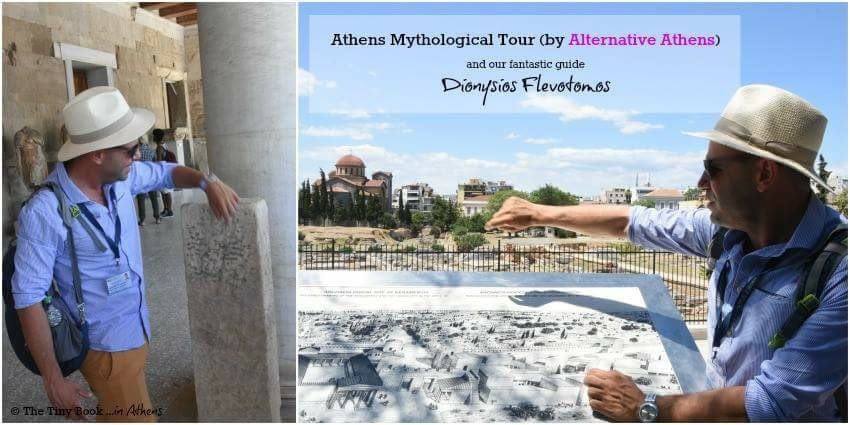
Our guide, Dionysios. The first picture was at the Stoa of Attalos; the second was near the Kerameikos cemetery.
Alternative Athens proposes this “Mythological Tour of Athens“, a 4-hour walking tour highlighting the city’s landmarks and the Architecture, Archaeology, and Politics of Athens through Mythology and History. It is an excellent way to see Athens’ landmarks at a reasonable pace.
>> Here you can book this fantastic tour.
Our guide, Dionysios, was highly knowledgeable. He has a solid background and was available to answer all of our questions. I was deeply touched by his love for his city and the enthusiasm, patience, and dedication he puts into what he does.
More Athens Tours For Myth and History Enthusiasts
These are some of the best tours in Athens that place a significant focus on history and mythology:
- Athens Highlights: Myths & Philosophers Private Walking Tour
- Athens: Guided Mythological Walking Tour
- Athens: Acropolis, Parthenon & Acropolis Museum Guided Tour
- Mythology Treasure Hunt with Food Tasting Stops
- Private Secret Acropolis Tour
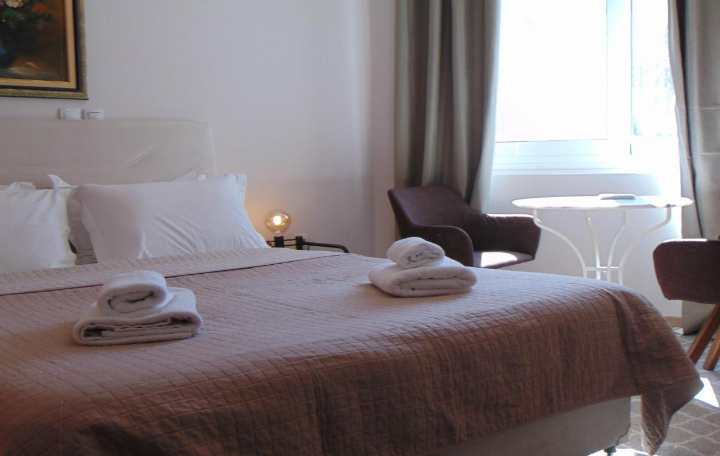
Where to Stay in Athens
PLACES TO STAY NEAR THE ACROPOLIS
Luxury Accommodation – Acropolis View Penthouse
- Fantastic Acropolis views
- Daily housekeeping
- Close to Plaka and Monastiraki
Check availability on Booking
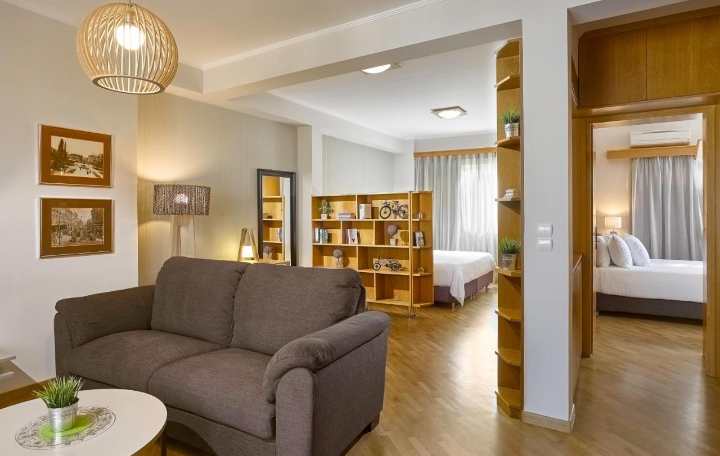
Comfort Accommodation – Moon and Stars Boutique Hotel
- Hot Tub and Jacuzzi
- Panoramic Terrace
- Only steps from Monastiraki
Check availability on Booking
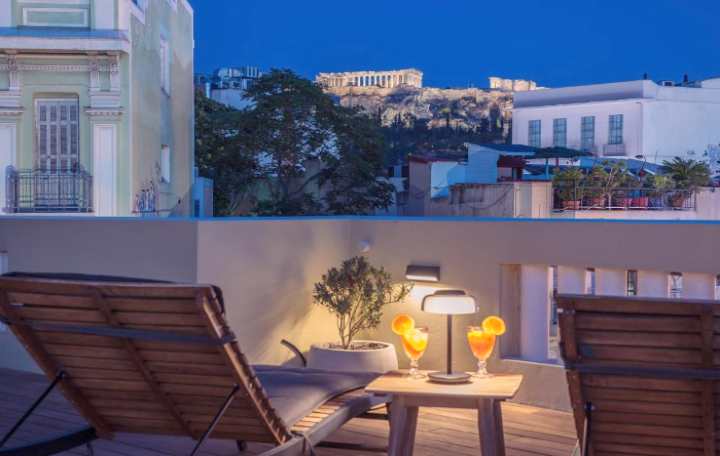
Budget Accommodation – Metropolis B2
- Within steps from the Metro
- On-site parking
- Luggage storage available
Check availability on Booking

Gabi Ancarola
I have been living in Chania, Crete, since 2016. This has given me an intimate knowledge of Greece. In Crete, I’m a travel writer and also host culinary experiences. I co-authored DK Eyewitness Top 10 Crete. I write about Crete at Crete Insider and about Greek food at My Cretan Recipe.