Kalambaka, Before and After Meteora: A Town Worth Knowing
For many travelers, Kalambaka exists only as a name on a sign — the place you pass through on the way to Meteora. A night’s stop. A practical base. Somewhere to sleep before the real experience begins.
And yet, Kalambaka has a rhythm of its own, one that reveals itself quietly before and after the crowds arrive.
This post has affiliate links. If you make a purchase, I might make a small commission at no extra cost to you.
Set directly beneath the towering rocks, this small town has learned to live in the shadow of something extraordinary.
What results is a place that feels grounded, unpretentious, and surprisingly warm — especially for those who take a moment to look beyond its role as a gateway.
Morning in Kalambaka

Early mornings in Kalambaka belong to locals. Bakeries open their doors. Cafés fill with regulars ordering their usual coffee. The streets are calm, the rocks catching the first light of the day.
This is one of the best times to be here — before tour buses move, before cameras come out, before Meteora becomes the focus. Kalambaka feels lived in, not staged.
For travelers staying overnight, these quiet hours offer a glimpse into daily life beneath the cliffs.
→ Discover Where to Stay in Kalambaka.
A practical base — with personality
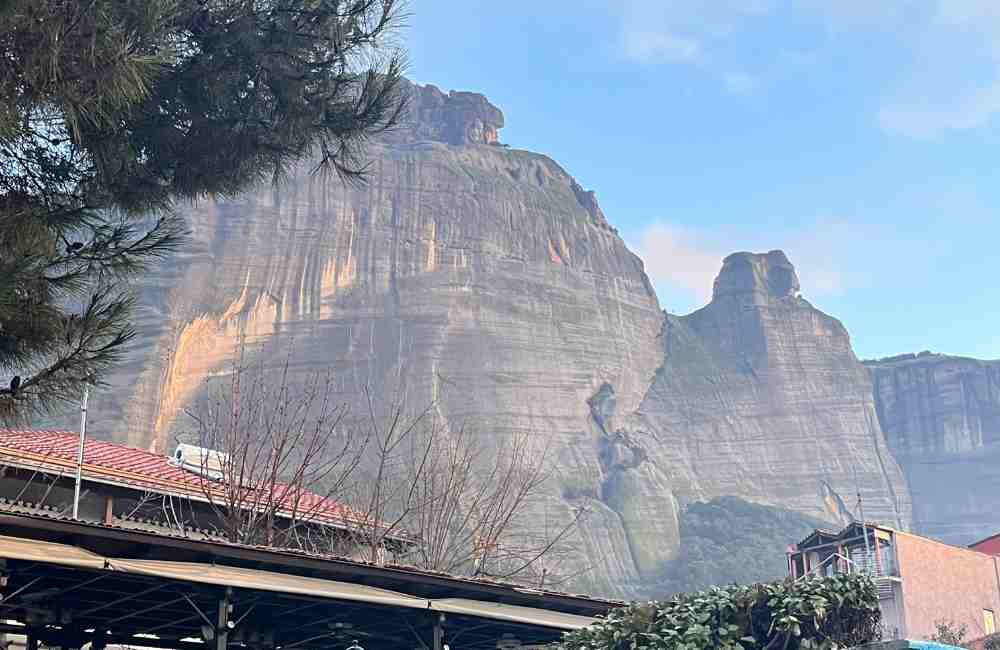
Kalambaka works exceptionally well as a base for exploring Meteora, especially for those who want flexibility and time.
Unlike faster-paced stops, staying here allows you to spread the experience across mornings and evenings, when the landscape feels calmer and more intimate.

The town offers a range of accommodations — from simple family-run hotels to comfortable boutique stays — along with tavernas, walking paths, and views that never feel far away.
But practicality isn’t Kalambaka’s only strength. There’s a sense of ease here, a familiarity that comes from years of welcoming travelers without losing local identity.
Eating like a local
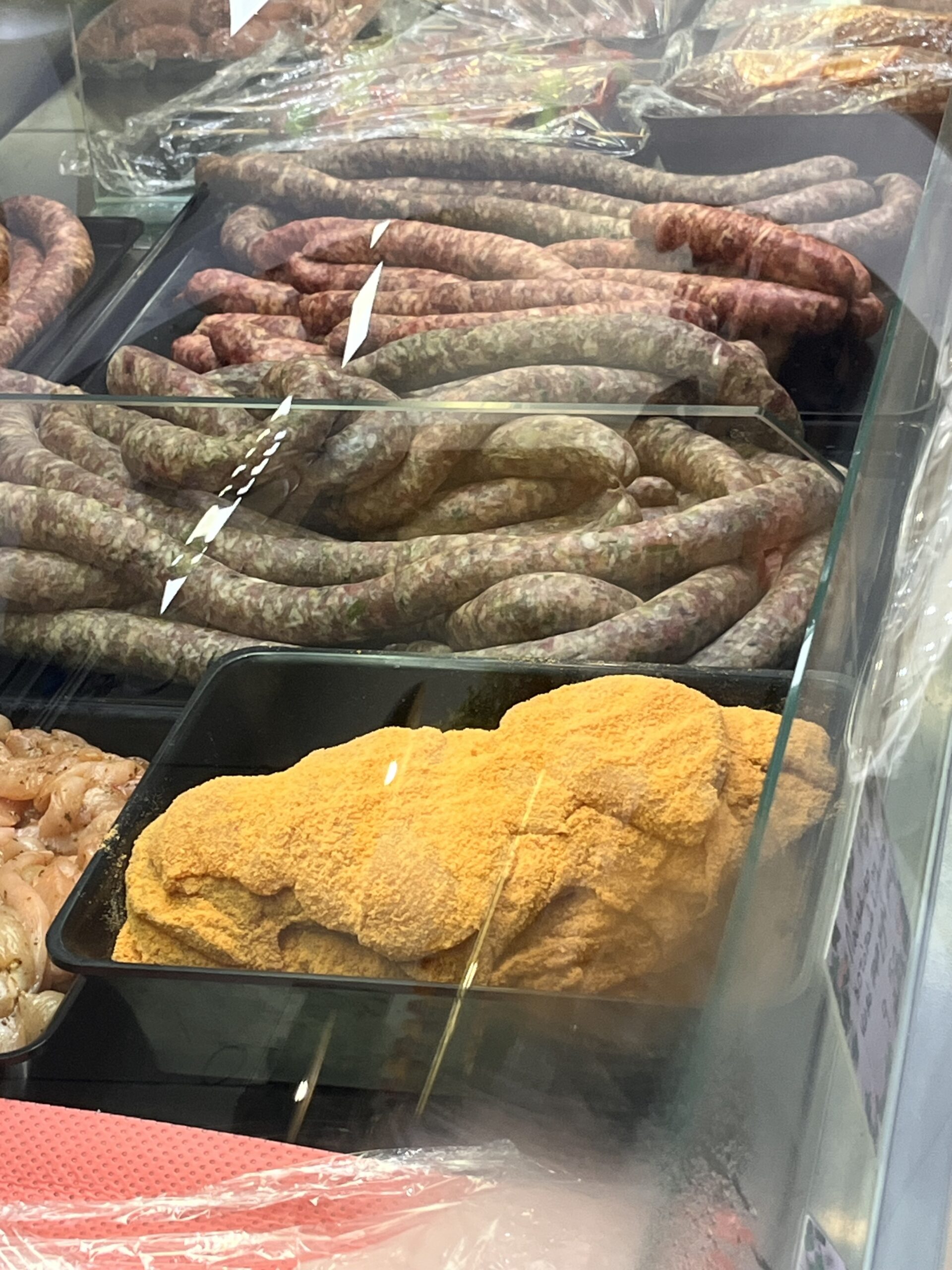
Food in Kalambaka is comforting and straightforward — the kind of meals that suit both long walking days and slow evenings.
Traditional tavernas serve grilled meats (especially sausages), plenty of mushrooms, seasonal vegetables, and local wine, while small cafés invite you to linger rather than rush. These are places built around conversation and routine, not performance.

Tip: Try the Thessalian Farsala halva — a soft, buttery almond‑studded sweet that’s a regional favourite in Kalambaka and beyond. Though its roots lie in nearby Farsala in central Greece, this caramel‑like treat reflects centuries‑old regional tradition.

You don’t need a plan. Follow the sound of plates, the hum of voices, the tables filled with families and friends.
After Meteora
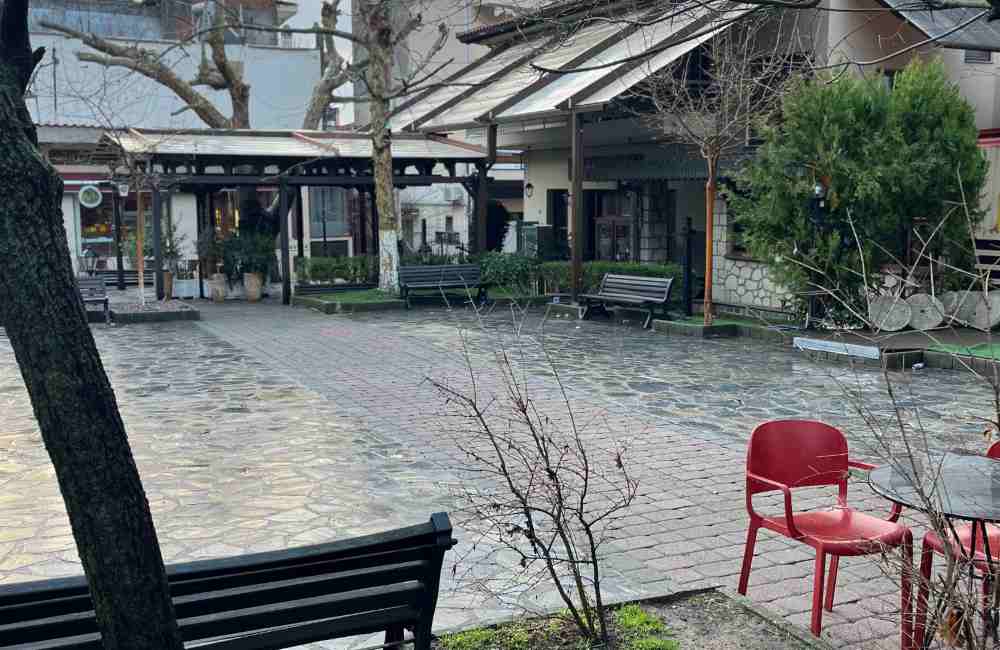
The town changes subtly after a day among the rocks.
As the light softens and shadows stretch across the valley, Kalambaka becomes quieter again. Travelers return tired but thoughtful. Locals reclaim the evening. Dinner slows. Streets empty gently.
This is when Kalambaka feels most itself — not a transit point, but a place to rest, reflect, and prepare for whatever comes next.
Staying longer changes the experience
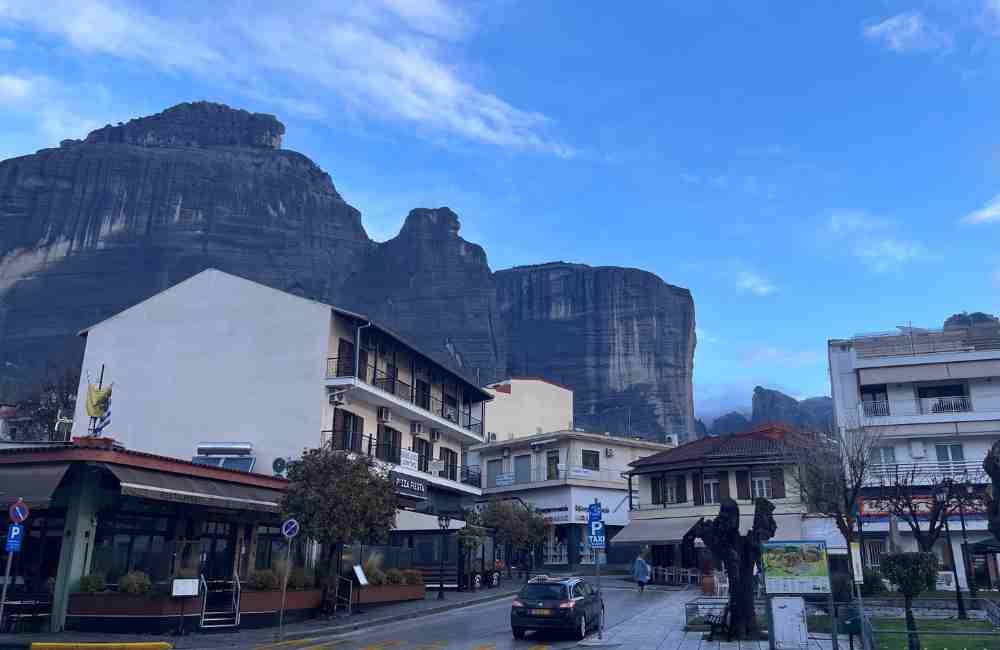
Using Kalambaka only as a stopover misses its quiet value. Staying longer — even just an extra night — transforms the way Meteora is experienced.
Early starts feel easier. Evenings feel earned. And the rhythm of the town offers balance to the intensity of the landscape above.
For travelers seeking a more considered way to explore Meteora, Kalambaka provides something essential: space.
→ You might be interested in reading Standing on the Edge of Awe: A First-Time Visit to Meteora
More than a base

Kalambaka doesn’t compete with Meteora — it complements it.
It’s the place where anticipation builds and where impressions settle. Where you wake with the rocks in view and return ready to be still. A town shaped by proximity to wonder, but rooted firmly in everyday life.
Before Meteora. After Meteora.
Kalambaka is worth knowing in both moments.
Kalambaka Practical Guide
Where to stay, eat & walk

Kalambaka is small, walkable, and easy to settle into — which makes it an ideal base for Meteora if you want flexibility and quieter moments. This guide focuses on places that fit a slow, comfortable travel style, rather than rushed sightseeing.
Where to stay in Kalambaka
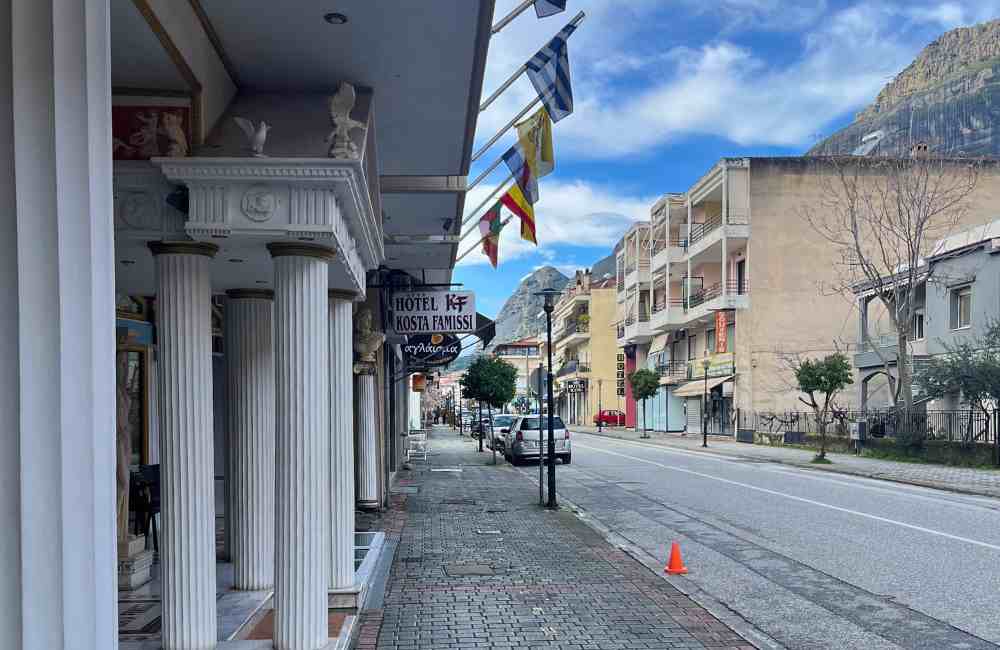
Kalambaka’s best stays are those that allow you to move easily between town life and Meteora, without feeling disconnected from either.
Family-run hotels and guesthouses near the center are often the most pleasant options — walkable, friendly, and well-suited for early starts or slow evenings.
Tip: Staying at least two nights makes a noticeable difference to how relaxed the Meteora experience feels.
→ Check out the best places to stay in Kalambaka
Where to eat in Kalambaka

Food in Kalambaka is hearty, traditional, and deeply satisfying — especially after a day among the rocks. Dishes to try include different sausage varieties and local mushrooms.
Traditional taverns
- Taverna Dias (Kalambaka)
Classic Thessalian dishes, generous portions, and a relaxed local crowd. → Check reviews here. - Taverna Gardenia (Kastraki)
Simple, well-cooked food with a home-style feel — popular with residents rather than tour groups. → Check reviews here.
Cafés & easy evenings
- Café Gallery
A comfortable spot for morning coffee or a quiet break during the day. - Street cafés near the center
Ideal for watching daily life unfold — especially in the early evening.
Tip: Follow where locals eat after sunset; it’s the best indicator of quality here.
Things to do in Kalambaka
Kalambaka isn’t just a base for Meteora — it has its own charm, history, and a few stops worth exploring.
Explore the old town (Sopotos)
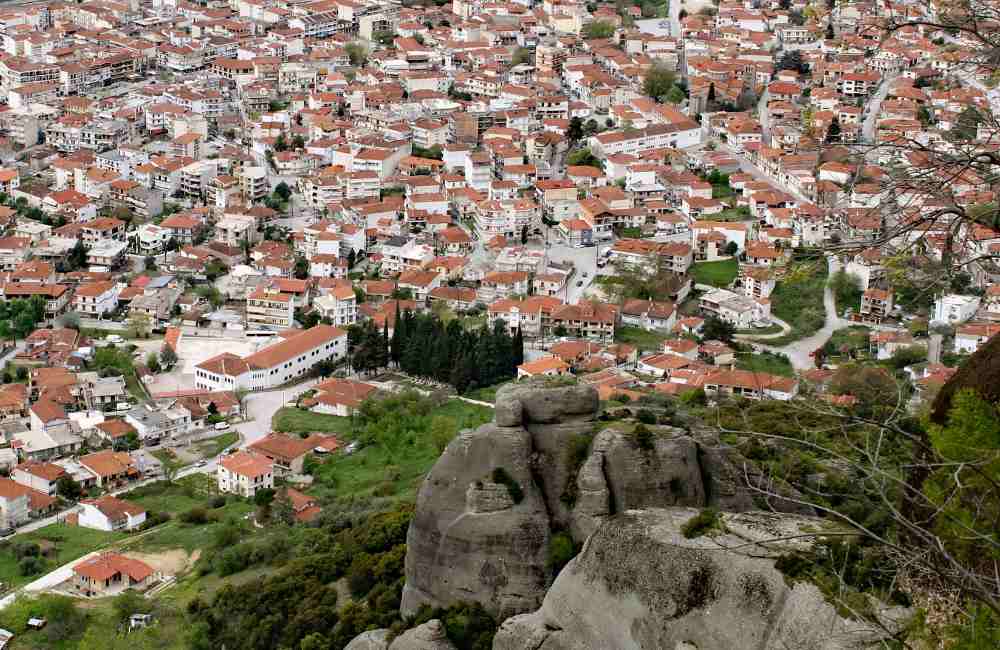
Right beneath the towering rocks of Meteora lies the historic old town, locally known as Sopotos. Its narrow, stone‑paved streets and traditional houses give a quieter, more authentic feel than the modern centre. It’s a great area to wander slowly, peek into local life, and soak up the atmosphere.
Byzantine Church of the Dormition of the Virgin Mary

In Sopotos stands one of the town’s most remarkable landmarks: the Byzantine Church of the Dormition of the Virgin Mary. Built between the 10th and 11th centuries on the site of an earlier early-Christian basilica, it’s one of the oldest churches in the area.
What makes it truly unique — and rare in Greece — is its marble pulpit positioned in the centre of the interior, rather than to the side as in most Orthodox churches. Inside, you’ll also find frescoes dating from the 12th to 16th century, a finely carved wooden iconostasis, and parts of an ancient mosaic floor. The church feels timeless, quietly anchored beneath the Meteora cliffs.
Natural History Museum & Mushroom Museum
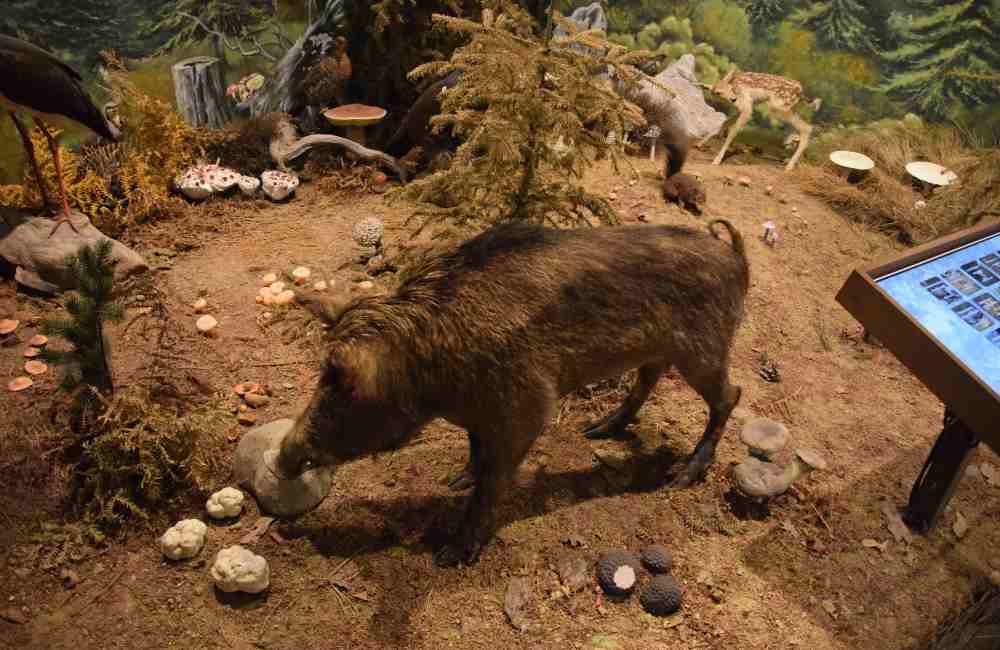
One of Kalambaka’s most distinctive museums is the Natural History Museum of Meteora & Mushroom Museum. It displays local wildlife in lifelike dioramas and showcases around 250 species of mushrooms. It’s a surprisingly engaging way to connect with the region’s nature, ecology, and traditional foraging culture.
This is one of the best places to see in Kalambaka if you’re visiting with kids.
Prehistoric Cave of Theopetra
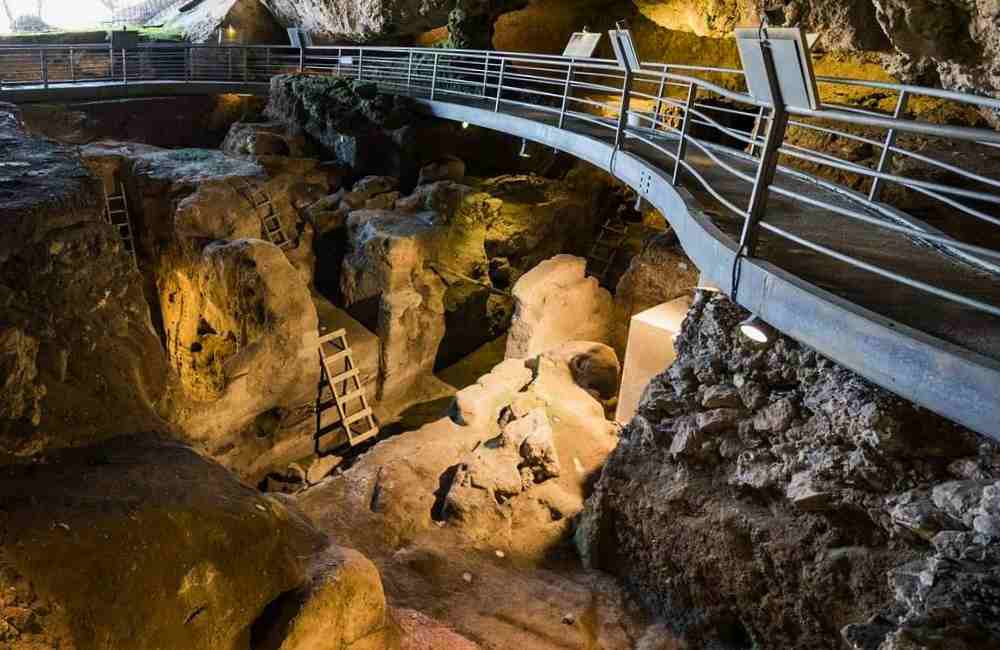
Just a short drive from Kalambaka lies one of Greece’s most important archaeological sites — the Prehistoric Cave of Theopetra. This remarkable cave has been occupied by humans for tens of thousands of years, offering an extraordinary window into prehistoric life in Thessaly.
Greek Education & Book Museum
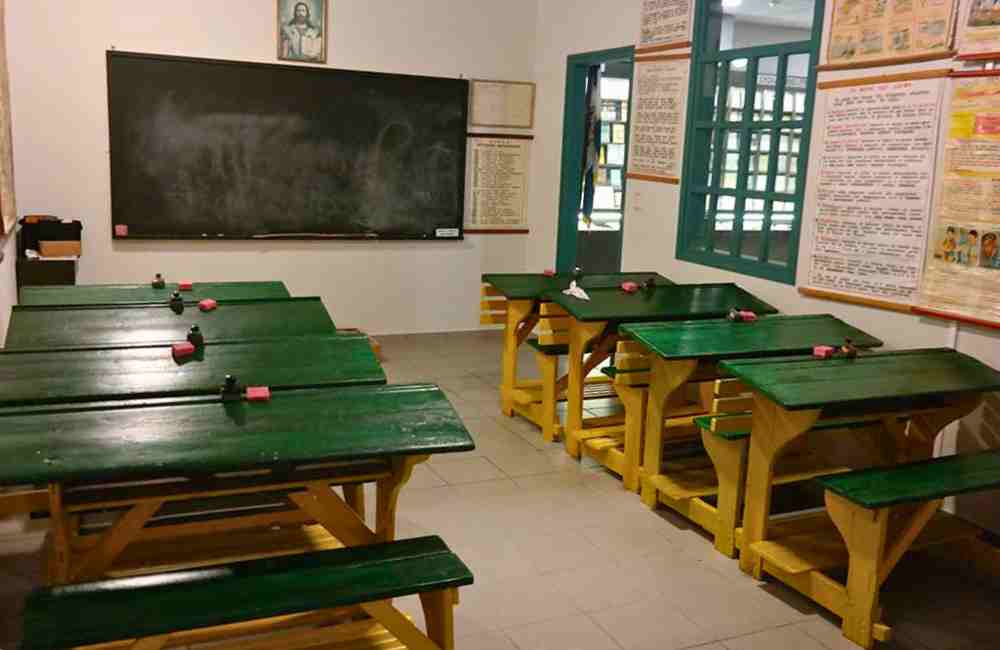
For a small cultural stop, the exhibits include schoolbooks used in Greece and Greek communities abroad, ancient Greek writings printed between 1500 and 1830, Aesop’s myths, fairy tales, school artifacts, and photographs of Meteora and monastic life.
The museum is organized into engaging spaces like the Old Classroom, where visitors can write with pen and ink and experience traditional school lessons; the Aesop Hall that brings myths to life through narrated displays; and the Meteora Hall, which showcases the monasteries and rocks in 3D.
Strolls and town life
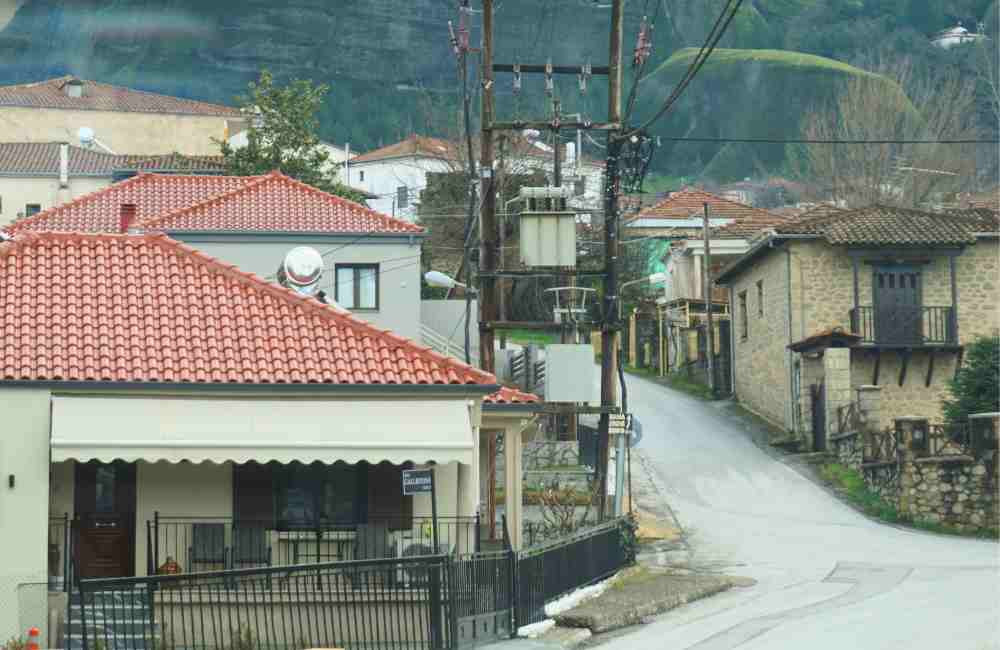
Kalambaka is very walkable. Take a gentle walk through the centre or along paths toward the lower rock formations.
Pause at a café, watch the daily rhythm of the town, and enjoy the contrast between the quiet streets and the dramatic cliffs above.
Where to walk in Kalambaka

Kalambaka rewards walking — not as exercise, but as a way to ease into the landscape.
Town walks
- Old Town streets
Small, lived-in streets where daily life unfolds slowly. - Evening strolls through the center
Especially pleasant after dinner, when the town quiets down again.
Nature walks near town
- Paths toward the lower rock formations
Gentle routes that offer views without committing to long hikes. → This is our experience - Short walks at sunrise or sunset
These moments transform the landscape and feel far removed from peak hours.
Tip: Walking without an agenda is often the best way to experience Kalambaka.
When to slow down
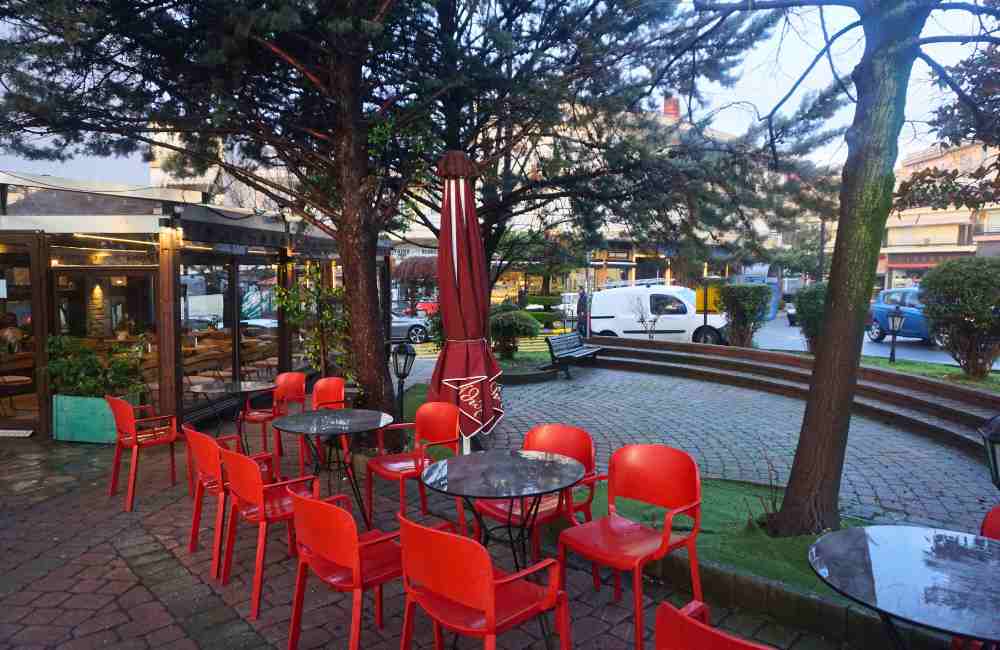
Kalambaka is at its best early in the morning, and after the day visitors leave. Plan your walks, meals, and rest around these quieter windows, and the town reveals its softer side.
For travelers using Kalambaka as a base, this rhythm naturally supports a more thoughtful way of experiencing Meteora — one shaped by timing rather than speed.
Pin for Later!
Things to Do in Kalambaka


Gabi Ancarola
I have been living in Chania, Crete, since 2016. This has given me an intimate knowledge of Greece. In Crete, I’m a travel writer and also host culinary experiences. I co-authored DK Eyewitness Top 10 Crete. I write about Crete at Crete Insider and about Greek food at My Cretan Recipe.